Essays

A Woman Is Not A Sex Machine: Modesty Is Built On Lies


I have a lot of friends who are really into modesty.

To be perfectly honest, I guess I err toward being pro-modesty myself. Ultimately, however, I think the concept is built on lies.

This blog post is supposedly about the stigma surrounding breastfeeding. That’s how it started out. My wife thought I should call it something like “Boobs Are For Babies: A Father’s Perspective On Breastfeeding.” I really like that idea (enough to include it here), but this issue has a far deeper root than being about comfort levels around someone exposed to nourishing a child. The only reason breastfeeding is an issue we need to talk about is that we have all accepted a much larger lie: the human body is meant for sexual use.

The human body obviously has a valuable sexual function; we can’t abandon that even when we think we should. The problem is that we have all bought into a hyper-sexualization of the human form. The pro-modesty crew are often some of the biggest proponents of the hyper-sexualization myth. I’m talking about those who get nervous about marble statues because they think any nude form must have been designed by ancients to insight mass arousal. Those of us who want to protect sexuality as a special thing while going along with the assumption that it is the main purpose of the human form are actually buying into a falsehood sold to us by both sides of generations of culture wars. Those who scream for sexual liberation make life out to be all about sex. Those who have screamed for censorship have agreed that human bodies are there to be used and we must lock them up for the appropriate context.

I’m telling you that there are thousands of non-sexual purposes for the human body, but that the human body is never a valid source for building an identity.

Whether we fight for sexual liberation or modesty, we actually accept the idea that everything always comes back to sex; it doesn’t. It might seem like it does in a photoshopped, air-brushed, sensory-overloading culture that is constantly pitch vague siren-songs on how to become perfectly satisfied. Even the most conservative among us tend to think of a marriage existing mainly for sex.

Public breastfeeding is awkward. It’s okay that we find it awkward. But our question at that point becomes “does this awkwardness mean that we should discourage the practice or that we should be very intentional about recognizing the valid purpose of the practice?” I would argue wholeheartedly that we should take this awkwardness as an opportunity to recognize that a breast is mainly a tool that gives a mother the opportunity to give life and strength from her own body into the body of her child. The greatest strength and beauty of a breast does not pull from sexual sources. Myth broken.

Loving other people’s physical bodies is really hard work, and it rarely has anything to do with sex. Changing thousands of diapers, bathing an elderly loved one, and helping a sickly spouse use the bathroom are all tasks that are a stronger form of physical love than sex. A form of cherishing a person’s form in their immense vulnerability. Becoming comfortable around breastfeeding is just one such task.

New mothers have a serious load of stress building up on their shoulders. Weird hormones, little sleep, milk supply issues, and who knows what else is keeping them at their wit’s end and ready to throw in the towel. In case you don’t realize it, breastfeeding is often very hard work. It taxes the body physically and doesn’t usually work without a great deal of struggle. Breastfeeding moms rarely desire to showcase their breast publicly, but they’re attempting to care for someone who is utterly defenseless and solely reliant on them.

Am I saying people should get comfortable staring at breastfeeders? Obviously not. Am I suggesting that moms shouldn’t show some sort of decorum according to their location? No.

Am I suggesting that things like lust and rape should be ignored or that they can simply be idealized away? No, we can’t avoid sexual deviations and we should stand against them. We should stand against them by seeing and valuing the body on a vastly wider spectrum.

Sex is a sacred thing, but the human body is more sacred than sex. We should be willing and able to become Good Samaritans regardless of the nakedness of those in need.

_______

Further Reading

What Daughters Should Expect From Fathers

The Tragedy Of Having A Baby

How My Wife Transformed From A Weak, Doubtful Girl Into A Nurturing Momma

Michael Pollan Didn’t Start This


“Americans today are having a national conversation about food and agriculture that it would have been impossible to imagine even a few short years ago. To many Americans it must sound like a brand-new conversation, with its racing talk about high price for cheap food, or the links between soil and health, or the impossibility of a society eating well and being in good health unless it also farms well. But to read the essays in this sparkling anthology, many of them dating back to the 1970s and 1980s, is to realize just how little of what we are saying and hearing today Wendell Berry hasn’t already said, bracingly, before.

And in that “we” I most definitely, and somewhat abashedly, include myself. I challenge you to find an idea or insight in my own recent writings on food and farming that isn’t prefigured (to put it charitably) in Berry’s essays on agriculture. There might be one or two in there somewhere, but I must say that reading and rereading these essays has been a deeply humbling experience.

It has also been a powerful reminder that the national conversation now unfolding around the subject of food and farming really began back in the 1970s, with the work of Berry and a small handful of his contemporaries, including Francis Moore Lappé, Barry Commoner, and Joan Gussow. All four of these writers are supreme dot connectors, deeply skeptical of reductive science, and far ahead not only in their grasp of the science of ecology but in their ability to actually think ecologically: to draw lines of connection between hamburgers and the price of oil, or between the vibrancy of life in the soil and the health of the plants and animals and people eating from that soil.”

– Michael Pollan, excerpt from his Introduction to Wendell Berry’s farm essay collection Bring It To The Table

_________

I truly respect men like Michael Pollan and Joel Salatin, but, as Pollan himself lets us know here, they are late to the game when it comes to the crisic farming, economic, and ecological situations today. They were simply born too late, and their interest in the issue is necessarily similar to mine in that it is basically reactionary.

If I were born in the 1940s, would I so easily see the growing problems of the changing system that Berry and Lappé saw the 1960s? I would love to say yes, of course I could spot the obvious flaws, but since almost no one else did, I can’t be confident that I would have been so cautious. We have to look to the men who saw the problems not because of their results but by their roots in poor thinking and short-sighted planning. The Berrys and Fukuokas were thinking differently when the problems were still originating; their thoughts and opinions carry the weight of an utterly alternative outlook from the start.

Do we need younger men to take on this alternative mindset? I certainly hope so; I am eager to be one. Ideally everyone would catch on to a different big picture from the current pipe dreams being dealt out. The problem itself has lasted so long at this point that it would be difficult for those who saw it coming to outlive it. Generations must pick up the torch to make change, but we have to always go back to what went wrong and who witnessed it happening.

_________

Related Reading

An Agricultural Insight From Tolkien And Lewis

A Japanese Scientist Questions The Reasonability Of Agricutural Science

Wendell Berry On The Difference Btween A Path And A Road

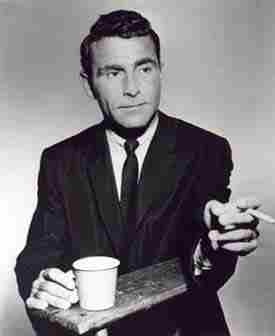
Rod Serling On Speculative Fiction And Censorship


Mike Wallace – “You’ve come a long way since those early days, and perhaps more than any other writer your name is figured in the classic battle — that is television writer — the battle of the writer to be his own man. What happens when a writer like yourself writes something that he really believes in, for television?”

. . .

RS – “Well, depending of course on the thematic treatment you’re using, if you have the temerity to try to dramatize a theme that involves any particular social controversy currently extent, you’re in deep trouble.”

MW – “For instance?”

RS – “Um, a racial theme, for example. My case in point, I think, a show I did for the Steel Hour some years ago, three years ago, called Noon On Doomesday, which was a story which purported to tell what was the aftermath of the alleged kidnapping in Mississippi of the Till boy, the young Chicago negro. And I wrote the script using “black” and “white,” uh, initially. Then it was changed, uh, to suggest an unnamed foreigner. Then the locale was moved from the South to New England, and I’m convinced they’d have gone up to Alaska or the North Pole [using] Eskimos as a possible minority, except I suppose the costume problem was of sufficient severity not to attempt it. But it became a lukewarm, vitiated, emasculated kind of show.”

MW – “You went along with it?”

RS – “All the way. I protested, I went down fighting as most television writers do, thinking, in a strange, oblique, philosophical way that ‘better say something than nothing.’ In this particular show, though, by the time they had finished taking Coca-Cola bottles off the set because the sponser claimed this had southern connotations, suggesting to what depth they went to make this a clean, antisepticly, rigidly, ah, acceptable show. Ah, why, it bore no relationship at all to what we had purported to say initially.”

MW – “Paddy Chayefsky has talked about the insidious influence of what he called ‘pre-censorship.’ How does that work?”

RS – “Pre-censorship is a practice, I think, of most television writers. I can’t speak for all of them. This is the prior knowledge of the writer of those areas which are difficult to try to get through and so a writer will shy away from writing those things which he knows he’s going to have trouble with on a sponsorial or an agency level. We practice it all the time. We just do not write those themes which we know are going to get into trouble.”

MW – “Who’s the culprit? Is it the network? The sponsor? It sure is not the FCC.”

RS – “No, it’s certainly not the FCC, ideally speaking, of course. It’s a combination of culprits in this case, Mike. It’s partly network. It’s principally agency and sponsor. In many ways I think it’s the audience themselves.”

MW – “How do you mean?”

RS – “Well, I’ll give you an example. About a year ago, roughly eleven or twelve months ago, on the Lassie show — this is a story usually told by Sheldon Leonard who was then associated with the show — Lassie was having puppies. And I have two little girls, then aged five and three, who are greatly enamored with this beautiful Collie and they watched the show with great interest. And Lassie gave birth to puppies, and Mike, it was probably one of the most tasteful and delightful and warm things depicting what is this wondrous thing that is birth. And after this show, I think they were many congratulations all around because it was a lovely show, the sort of thing I’d love my kids to watch to show them what is the birth process and how marvelous it is. They got many, many cards and letters. Sample card, from the deep South this was: ‘if I wanted my kids to watch sex shows, I wouldn’t have them turn on that. I could take them to burlesque shows.’ And as a result of the influx of mail, many of the cards, incidentally, as Sheldon tells it, were postmarked at identical moments all in the same handwriting, but each was counted as a singular piece of mail. And as a result, the directive went down that there would be no shows having anything to do with puppies, that is in the actual birth process. Well, obviously, it is this wild lunatic fringe of letter-writers that greatly affect what the sponsor has in mind.”

MW – “You can understand the position of the sponsor, can’t you?”

RS – “In many ways I suppose I can. He’s there to push a product.”

MW – “He has a considerable stake, thus, in what goes on the air.”

RS – “Most assuredly, and in those cases where there is a problem of public taste, in which there is a concern for eliciting negative response from a large mass of people, I can understand why the guys are frightened. I don’t understand, Mike, for example, other evidences and instances of intrusion by sponsors. For example, on Playhouse 90, not a year ago, a lovely show called ‘Judgment At Nuremberg,’I think probably one of the most competently done and artistically done pieces that 90’s done all year. In it, as you recall, mention was made of gas chambers and the line was deleted, cut off the soundtrack. And it mattered little to these guys that the gas involved in concentration camps was cyanide, which bore no resemblance, physical or otherwise, to the gas used in stoves. They cut the line.

MW – “Because the sponsor was…”

RS – “Did not want that awful association made between what was the horror and the misery of Nazi Germany with the nice chrome wonderfully, antiseptically clean beautiful kitchen appliances that they were selling. Now this is an example of sponsor interference which is so beyond logic and which is so beyond taste — this I rebel against.”

MW – “You’ve got a new series coming up called ‘The Twilight Zone.’ You are writing, as well as acting executive producer on this one. Who controls the final product, you or the sponsor?”

RS – “We have what I think, at least theoretically, anyway, because it hasn’t really been put into practice yet, a good working relationship, where in questions of taste and questions of the art form itself and questions of drama, I’m the judge, because this is my medium and I understand it. I’m a dramatist for television. This is the area I know. I’ve been trained for it. I’ve worked for it for twelve years, and the sponsor knows his product but he doesn’t know mine. So when it comes to the commercials, I leave that up to him. When it comes to the story content, he leaves it up to me.”

MW – “Has nothing been changed in the…”

RS – “We changed, in eighteen scripts, Mike, we have had one line changed, which, again, was a little ludicrous but of insufficient basic concern within the context of the story, not to put up a fight. On a bridge of a British ship, a sailor calls down to the galley and asks in my script for a pot of tea, because I believe that it’s constitutionally acceptable in the British Navy to drink tea. One of my sponsors happens to sell instant coffee, and he took great umbrage, or at least minor umbrage anyway, with the idea of saying tea. Well, we had a couple of swings back and forth, nothing serious, and we decided we’d ask for a tray to be sent up to the bridge. But in eighteen scripts, that’s the only conflict we’ve had.”

—–

MW – “Is pre-censorship, though, involved? Are you simply writing easy?”

RS – “In this particular area, no, because we’re dealing with a half hour show which cannot probe like a 90, which doesn’t use scripts as vehicles of social criticism. These are strictly for entertainment.”

MW – “These are potboilers.”

RS – “Oh, no. Un-uh. I wouldn’t call them potboilers at all. No, these are very adult, I think, high-quality half hour, extremely polished films. But because they deal in the areas of fantasy and imagination and science-fiction and all of those things, there’s no opportunity to cop a plea or chop an axe or anything.”

MW – “Well, you’re not gonna be able to cop a plea or chop an axe because you’re going to be obviously working so hard on ‘The Twilight Zone’ that in essence, for the time being and for the foreseeable future, you’ve given up on writing anything important for television, right?”

RS – “Yeah. Well, again, this is a semantic thing — ‘important for television.’ I don’t know. If by important you mean I’m not going to try to delve into current social problems dramatically, you’re quite right. I’m not.”

– Excerpts from Mike Wallace interviewing Rod Serling on The Mike Wallace Interview in anticipation of Serling’s new series, The Twilight Zone, 1959.

_________

Whether Serling realized it or not in the midst of this smoke clouded interview, he would find his most memorable avenues for social commentary through the less “important for television” resource of speculative fiction. He would also continue to bump heads with McCarthy-Era censorship, having episodes banned from the air for racial and war themes raised among other ethical and philosophical questions.

While this interview remains cordial, it is hard not to recognized a self-censoring vehemence from Serling. Having been in the television industry for about a decade by this point, he is one of the most lauded and heavily censored figures on the stage as he prepares to create The Twilight Zone. Although I can’t say for certain, I would argue that this interview was a very intentional opportunity for Serling to make a public statement that defends his position while promising to toe the line with the censors. On the latter point, I am happy to say he would go on to fail tremendously, creating some of the most immortal and poignant sci-fi television ever made.

I would highly suggest that you watch his previously award-winning tv film “Patterns.” It is probably impossible to find on DVD, but it should be easy to find via YouTube or the like. It’s one of the best films I have ever seen, a commentary on corporate life and ethics that seems prophetic in the current age.

_________

Recommended Reading

C.S. Lewis and Kingsley Amis On The Value Of Science Fiction

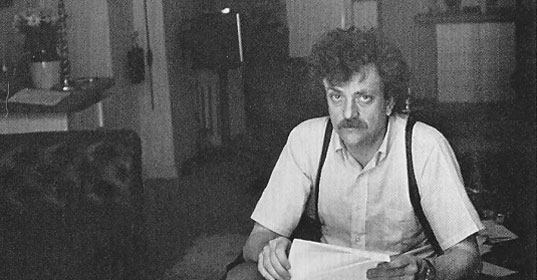
Kurt Vonnegut’s Pessimistic Social Commentary

Frankenstien And Human Nature
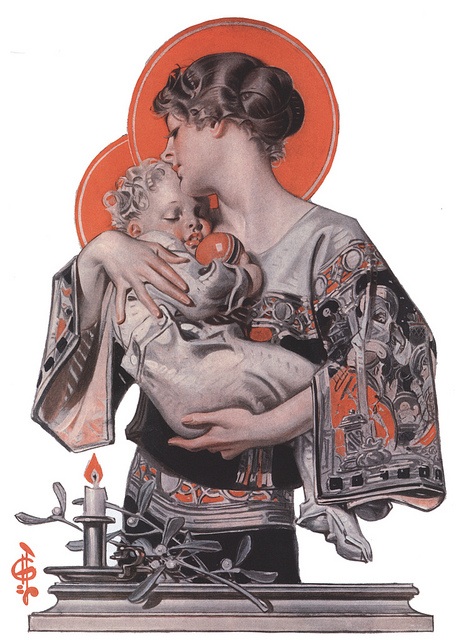
A Week With My Wife – A Mother’s Day Tribute To A Warrior Of Love


The week leading up to Mother’s Day 2014 has highlighted time and time again the incredible power my wife has as a mother and the effect her strengths as a woman have outwardly beyond our children, on myself and other mothers and families and friends.

When we got married about 4 1/2 years ago, all we really knew what that we wanted to make a family and care for other people and we really wanted to do it together. God gave me perspective on how this girl who thought herself weak and incapable would become someone who would boldly encourage others to have confidence and hope against their own fears. We were young and people told us before we got married that it would be really hard. We often struggled to wade through difficult seasons of our early marriage and some friends even said that they felt like we were changing for the worse. While I knew before I married her that my wife was designed to nurture others and that growing through really hard experiences would make us both more available to care for others, it still sucks to live through the actual hardships and try to maintain the belief that it’s worth it.

In the past couple of years we have started to hit our stride a bit more. We’re coming into our own identities as a family and as individuals in a way that makes us secure enough to pour out into the lives of those around us. Here’s a quick overview of the past week to give a taste of why I’m so blown away by who my wife is becoming.

On Sunday, when she was about 42 weeks pregnant, I sobbed on my wife’s shoulder because of how strong she is and how much stronger she is becoming. This is the first time this has ever happened. If she keeps growing like she has been it probably won’t be the last. On Monday, labor started around 4pm. It lasted through the night. In the midst of the insanity of hard labor, she suggested that I go take a nap so I could be rested(!?) Tuesday morning around 5:30am, after roughly 14 hours of sleepless, emotional, physically torturous labor, my wife gave birth to our third child, our first son! On Wednesday, Thursday, and Friday, we had countless helps from my visiting parents and friends who have dedicated themselves to making our home less stressful. Throughout this, my wife was more engaging and involved than I would have thought she should or could be. Her mind consistently went to making sure our two preschooler daughters felt like she was still interested in them. On Thursday, she started venturing out to sit in the living room. On Friday night, she started cleaning around the house again. On Saturday, she asked to go out for a drive to get some fresh air. This morning, on Mother’s Day, she was up with all three kids before I had a chance to know what was going on. She expresses worry that she won’t be able to handle three kids, but the truth is that there is no stopping this woman.

I expected her to be in bed for at least a week or two; I thought that was more than fair. She has been blessed with a pretty quick recovery, but her eagerness to get back into the game has alarmed and humbled me. She is doing things that she never thought she could do and recovering from them ready to do more. She’s pushing through all sorts of pain and she’s aware enough to be looking after the lesser needs of others. She is a seriously powerful mom.

The Tragedy Of Childbirth: If It Hurts, Embrace It


This morning, around 5:30, my wife gave birth to a beautiful, healthy baby boy. This baby ended up coming 15 days after his original due date and was born at home, my wife’s first VBAC. Mother and child are both in absolutely wonderful, if exhausted, shape.

The 14 hours or so of labor were utterly depleting, surreal, and some of the most emotionally moving experiences I’ve partaken in. There are a few human experiences which draw out our character and beliefs through situational responses and participating in the birth of a child is one of the most moving and least discussed of these experiences.

I think we often shrug away from this sort of experience because of the amount of hope investment and lack of control available through such a trying time. People can argue statistics day and night about the safety and ethics of homebirth v. hospital birth or vaginal v. C-section, but in the end I think our prefered stance really comes out of our capability to accept life-threatening and potentially tragic situations without attempting to control them. No one wants to stand by and watch tragedy befall their loved ones, but it is a constant and real possibilty. While we understand a lot about the human body and how to “successfully” modify its efforts at the birthing process, the truth is that it knows what it’s up to and often our attempts to improve upon its effects can just as easily thwart an ideal outcome.

So why do we insist upon an ever more informed and proactive approach? I would agrue that it is generally out of a fear of experiencing the emotional gravity of a situation out of our own control. We would rather trust a professional and work to create the outcome than trust fate or nature, though the professional always knows less than what the natural body is capable of.

_________

As we slowly labored through the evening and the night, we experienced all available emotions. My wife was eager then scared, prayerful and penitent, cursing her existence and submissive to God’s will. She prayed for strength at time and at other times she prayed to die. She accused us of lying to her and of not trying to help her. She was a wreck and then she was utterly calm. She kept believing that she was incapable of birthing and it would never happen. Overall and through this, she was like a warrior whose battle was within her own mind and body.

I was there to help her as best I could through every contraction. Even though I didn’t experience any on the birthing pain, I got a front row seat to see the physical aspects of the pain. I shared in all her emotional fears and more. The sheer exhaustion of physically fighting a body as it tries to work a baby out creates insanity. Mostly I assumed that all the midwives thought I was a terrible husband. At times I thought of telling my wife to suck it up. I wanted to run away because I knew I wasn’t good enough. I sat in awe of her resolve. I decided that she should have tried to deal with the pain more efficiently. I knew at some point that my muscles would literally give out. Overall, we both went back and forth between having hope and losing faith. We had times of trusting each other, the birthing process in her body, the midwives, and God. We also separately experienced times of condemning one another, the entire experience, the people we had chosen to rely on, and the will of God.

Human beings need these definitive experiences. We need to run marathons that we have invested our very lives in, completely draining and testing our commitments and our trust. We tend toward shallowness and half-hearted relations. We don’t want to experience hardships that test our true merits and expose out faults. Hardships might provide solid feedback and consequences.

Pushing ourselves to emotional, physical, and spiritual brinks provides us with increased strength and knowledge of the reality of our current beliefs and what we are fit to accomplish. My wife did more than either of us originally wanted her to or expected her capable of, and she showed herself to be a hero of mine. Our son’s life is the memorial of his mother’s strength.

_________

I’ll leave you with this transcript of a comment from comedian Louis C.K. on the value of experiencing emotions to their fullness instead of living in distraction.

“You need to build an ability to just be yourself and not be doing something. That’s what the phones are taking away, is the ability to just sit there. That’s being a person. Because underneath everything in your life there is that thing, that empty—forever empty. That knowledge that it’s all for nothing and that you’re alone. It’s down there.

And sometimes when things clear away, you’re not watching anything, you’re in your car, and you start going, ‘oh no, here it comes. That I’m alone.’ It’s starts to visit on you. Just this sadness. Life is tremendously sad, just by being in it…

That’s why we text and drive. I look around, pretty much 100 percent of the people driving are texting. And they’re killing, everybody’s murdering each other with their cars. But people are willing to risk taking a life and ruining their own because they don’t want to be alone for a second because it’s so hard. . .

(After hearing a song that brought back sad memories.)

And I go, ‘oh, I’m getting sad, gotta get the phone and write “hi” to like 50 people’…then I said, ‘you know what, don’t. Just be sad. Just let the sadness, stand in the way of it, and let it hit you like a truck.’

And I let it come, and I just started to feel ‘oh my God,’and I pulled over and I just cried like a bitch. I cried so much. And it was beautiful. Sadness is poetic. You’re lucky to live sad moments.

And then I had happy feelings. Because when you let yourself feel sad, your body has antibodies, it has happiness that comes rushing in to meet the sadness. So I was grateful to feel sad, and then I met it with true, profound happiness. It was such a trip.

The thing is, because we don’t want that first bit of sad, we push it away with a little phone or a jack-off or the food. You never feel completely sad or completely happy, you just feel kinda satisfied with your product, and then you die.”

_________

Related reading

How To Get Rid Of Faith

Our Decisions Make Lives

What Daughters Should Expect From Their Fathers

How To Get Rid Of Faith


“What those ancient Greeks (who also had some understanding of philosophy) regarded as a task for a whole lifetime, seeing that dexterity in doubting is not acquired in a few days or weeks, what the veteran combatant attained when he had preserved the equilibrium of doubt through all the pitfalls he encountered, who intrepidly denied the certainty of sense-perception and the certainty of the processes of thought, incorrigibly defied the apprehensions of self-love and the insinuations of sympathy–that is where everybody begins in our time.

In our time nobody is content to stop with faith but wants to go further. It would perhaps be rash to ask where these people are going, but it is surely a sign of breeding and culture for me to assume that everybody has faith, for otherwise it would be queer for them to be. . .going further. In those old days it was different, then faith was a task for a whole lifetime, because it was assumed that dexterity in faith is not acquired in a few days of weeks. When the tried oldster drew near to his last hour, having fought the good fight and kept the faith, his heart was still young enough not to have forgotten that fear and trembling which chastened the youth, which the man indeed held in check, but which no man quite outgrows. . .except as he might succeed at the earliest opportunity in going further. Where these revered figures arrived, that is the point where everybody in our day begins to go further.

The present writer is nothing of a philosopher, he has not understood the System, does not know whether it actually exists, whether it is completed; already he has enough for his weak head in the thought of what a prodigious head everybody in our day must have, since everybody has such a prodigious thought. Even though one were capable of converting the whole content of faith into the form of a concept, it does not follow that one has adequately conceived faith and understands how one got into it, or how it got into one.”

– Soren Kierkegaard (under the pseudonym Johannes De Silentio), excerpt from the Preface of Fear And Trembling.
_________

This sarcastic little preface starts one of the key works of existentialism, a book that champions faith. It turns out that Kierkegaard is, contrary to his claims, capable of presenting very dense philosophical concepts. His goal in this preface seems to be to validate self-doubt in a culture of self-presumption and faith in a culture that assumes it can discover all that there is to know. Doubt and faith exist as check and balance that should last a lifetime, keeping us honest about the nature of the things we believe and helping us to more deeply trust what we have recognized as reliable truth.

The interesting point here is that “our day” for Kierkegaard was the early 1840’s. It is sometimes hard to remember that the troubled ideas of a modern age brimming with scientific discovery are not new. Just because we are only recently making rampant “discoveries for discovery’s sake” does not mean we are the first or second or fifth generation to assume we can get somewhere based on discoveries alone. Humanity has eternally presumed and desired a mysterious completion of (or in) discovery rather than faith in anything. But isn’t that a form of faith in scientific discovery?

Kierkegaard is humble enough to assume that he will never be able to Systematize existence. Just as he calls our implicit faith in sensory-perception and process-of-thought into question, he questions whether faith itself, even if we claim to understand what it entails, can be pulled out and set aside from ration.

When I read this piece I immediately think about how ready we are to hurl a slew of random statistics and scientific studies at problematic points to prove our emotionally-based opinions. There are studies and statistics available to validate nearly every opposing viewpoint available to choose from today; so much so that, though we haven’t created self-presumption and human omnipotence, our generation has nearly perfected the use of them.

_________

Related reads

The Tragedy Of Having A Baby

What Christians Can Learn From Athiests

Wanna Change The World? Shake Someone’s Hand!

Author Quotes: Science, Religion, and Vonnegut’s Disrespect


PROTEIN
_________
“He was supposed to be our commencement speaker,” said Sandra.

“Who was?” I asked.

“Dr. Hoenikker – the old man.”

“What did he say?”

“He didn’t show up.”

“So you didn’t get a commencement address?”

“Oh, we got one. Dr. Breed, the one you’re gonna see tomorrow, he showed up, all out of breath, and he gave some kind of talk.”

“What did he say?”

“He said he hoped a lot of us would have careers in science,” she said. She didn’t see anything funny in that. She was remembering a lesson that had impressed her. She was repeating it gropingly, dutifully.

“He said, the trouble with the world was …”
She had to stop and think.

“The trouble with the world was,” she continued hesitatingly,

“that people were still superstitious instead of scientific. He said if everybody would study science more, there wouldn’t be all the trouble there was.”
“He said science was going to discover the basic secret of life someday,” the bartender put in. He scratched his head and frowned.

“Didn’t I read in the paper the other day where they’d finally found out what it was?”

“I missed that,” I murmured.

“I saw that,” said Sandra.

“About two days ago.”

“That’s right,” said the bartender.

“What is the secret of life?” I asked.

“I forget,” said Sandra.

“Protein,” the bartender declared.

“They found out something about protein.”

“Yeah,” said Sandra,

“that’s it.”


– Kurt Vonnegut, chapter 11 of Cat’s Cradle, titled “Protein.”

_________

I recently reviewed Vonnegut’s Slaughterhouse-Five on the blog, and everyone shouted loudly that I must read Cat’s Cradle, which I am happily diverting from my 55 List to indulge. As I mentioned before, Vonnegut gets us comfortable, speaks to us disarmingly and then makes a silly character of all of our presumptions and standards. He says, “look, I can show you the epitome of our social normalcy, and I can damn everything about these religions and this science and this culture. It’s all rotten.”

That’s what I like about this tiny chapter. It makes a perfectly poignant, stand-alone social commentary on how easily we can assume that science can replace religion, which can replace engagement. Apparently if we understand the “how”, we need not understand the “why”.

Religion is, by definition, systematization and lifestyle adherence to a standardized philosophy. It often gives us answers which have been pre-reasoned for us. We are asked to simply concede their apparent truth. Science often attempts to walk a similar line, replacing the “here’s why” with a “here’s how.” Just because something is presented to us systematically does not invalidate it, but there is always paradox and apparent holes.

Vonnegut’s constant hostility toward these forms seems to come almost solely from his perspective on their complete lack of moral sustenance. Surviving WWII, his confidence in the integrity of most social institutions was utterly destroyed. He is able to look at Christianity and democracy and science through the lenses of Hiroshima and genocide, and his arguments are pretty convincing. Humanity is implicit in evil, Vonnegut is a grinning rebel against responsible parties, and his claim is that your religion and your scientific discoveries are worthless without moral bearings to reel them in.

Do you object?


_________

Further reading

What Christians Can Learn From An Atheist

Masanobu Fukuoka And The Philosophy Behind The Science

Wendell Berry On Paths V. Roads

Wanna Change The World? Shake Someone’s Hand!

“II” by Wendell Berry


The poignancy of this poem is palpable. Alliteration.

Go check out jrbenjamin.com, ASAP.

The Tragedy Of Having A Baby


UPDATE!!!

My wife is 41+ weeks pregnant with our third child. Even though we’ve done this (twice) before, we are attempting a VBAC home-birth and we’ve both been running the full gamut of stressful and nervous emotions. All signs point toward a healthy and comfortable baby who just doesn’t want to come out yet(who can blame them?), but expecting to go into labor every hour for 3 weeks is exhausting.

The other day, after a solid cry session, my wife expressed again her current emotions in the constant waiting and said “I just feel like something bad has happened and I have to convince myself to be okay and bear it.” The truth is that anything we put significant hope in is a tragedy until it is fulfilled. It’s not tragic because we don’t want this baby, its tragic because we really, REALLY want this baby and we can’t do anything to get at it.

From a storytelling perspective, this makes a lot of sense. The goals that any characters hope toward and how their actions and fate play together are the plot of a strong story. The only difference between a traditional comedy and a tragedy is whether the hopes of the protagonist were eventually fulfilled. In a comedy he gets the girl and the happily-ever-after. In a tragedy he dies alone. Either way, the plot along the way is tinged with some level of fear that his hope is misplaced.

I think life should be full of these experiences. They suck pretty badly, but if we want to cultivate things like faith and hopefulness then we have to pour a lot of them out before we start seeing them rewarded. We live in a world that mostly let’s us down. Whether its the people we care for or the general negativity of circumstances, cultures, or political structures, we have more reasons to stop hoping and cut off faith in beauty and love and truth-acted-upon. But there is reason to hope, though we only do so in weakness now.

We’re pushing in to this idea. We’re recognizing the confusion and frustration and are choosing actively to have hope that we will look back in joy and laugh at what becomes a comedy in hindsight. We want ever stronger and stronger muscles of faith, persevering to trust in the truth regardless of attacks or whispers against it. As a farmer plants his seeds in the spring and watches the seasons change in eagerness, we have hoped and prayed toward this child’s birth and will continue to seek and find rest in the future healthy delivery of a son or daughter (we don’t know which!)

UPDATE!!!

_________

Further reading

What Daughters Should Expect From Their Fathers

Wanna Change The World? Shake Someone’s Hand!

What Christians Can Learn From Atheists

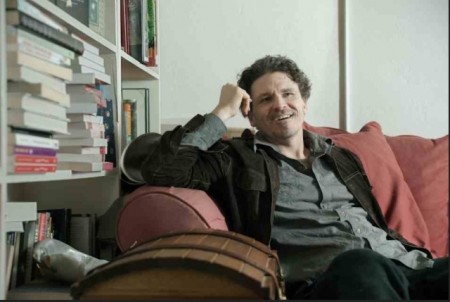
Author Quotes: Dave Eggers On Why Publishing Is Scary


“Publishing other people’s work is a hell of a lot more enjoyable than publishing your own. Publishing your own work is fraught with complicated, even tortured, feelings. Invariably you believe that you’ve failed. That you could have done better. That if you were given another month or another year, you would have achieved what you set out to do.
Actually, it’s not always that bad.
But usually it is.
Publishing someone else’s work, though, is uncomplicated. You can be an unabashed champion of that work. You can finish reading it, or finish editing it, and know that it’s done, that people will love it, and that you can’t wait to print it. That feeling is strong, and it’s simple, and it’s pure.”

– Dave Eggers, Introduction to the new collected volume The Best Of McSweeney’s

_________

I’m sure anyone that writes fiction and takes this action seriously experiences at least fleeting questions of whether everyone else with think they are crazy for what came from their mind. It is somehow easy to feel, simultaneously, a very deep human connection with a story and a fear that no one else will connect with the same elements. It’s much easier to read a new manuscript, know that it’s wonderful, and instantly validate it because we are not responsible for it and because we have already made a human connection with the author. Two people that grasp the value of a work is all that is needed to be sure of its merit.

I recently self-published an odd little children’s book that I have come to love. Self-publishing has been a really fun and positive experience and using Kickstarter to fund it provided a lot of community support that made all the difference, but having very little outside editing and really only printing on my own approval made me all the more apprehensive about the reception of the story.

People have finally started receiving and reading the book with a lot of positive responses, but the most impactful came last night, when my aunt contacted me and expressed a deep understanding of the simple story. Having at least one person grasp the human elements makes all the difference.

_________

Excerpts from my aunt’s response to Wandlung.

“Got your book today. Read it five times to six different people. . .It took me until the third read to really warm up to it partly because I like happy endings. Yet, in life, especially when our lives interact with others, we can’t always expect a happy ending. Sometimes friendships are only for a season and we go our separate ways. It’s not always a pain we acknowledge or even stop to properly grieve.”