Essays

55 Classics Review #3 – “Brothers And Friends: An Intimate Portrait Of C.S. Lewis” by Major Warren Hamilton Lewis


Upon reflection it seems a very gracious decision for The Classics Club to allow me to include my 55 list among the ranks. This book in particular is, beyond any stretch of the imagination, definitely not a classic. There is simply no way to spin it as such. It is the diary of a mostly obscure man who was the brother of a famous author. It is really a very great read, but it is more a specialty reading for certain enthusiasts.

Warren Lewis and his brother “Jack” (C.S. Lewis lifelong nickname) were inseparably close. They purchased a house together when they were in their 30’s and spent the rest of their lives under the same roof. While Jack was undoubtedly a devoted brother, it seems that Warren was far more attached to Jack as the only person he really felt he had maintained a deep connection with throughout his life.

The book is broken into 3 oddly-timed, untitled sections, but I would break it into 4 chapters based on the various lifestyles and tones portrayed in seasons.

Early Adulthood – Warren stayed in the army after WWI as a career soldier. He did not enjoy army life but felt it would be an easy way to retire as an early pensioner, which he did before his 38th birthday. The first section of the book covers his tours of duty in China, weekend visits to the home called the Kilns which he was already jointly purchasing with Jack and the old Mrs. Moore (Minto, as they called her, was the mother of Jack’s dead WWI brother-in-arms, Paddy Moore) in Oxford, and general army life.
Pre-WWII Retirement – From the end of 1932 to the start of World War II probably marked the highlight of W.H. Lewis’ lifetime. He had retired young, moved into the Kilns with Jack, was able to start taking annual “walking tours” with his brother, and was not yet plagued by alcoholic tendencies. He found delightful ways to keep himself busy both at home in Oxford and in frequent and long holidays. He owned a river boat, which he lived on for seasons at a time. At this time all his earlier plans had come together.
Post WWII – Lewis was called back to duty during the Second World War. He did not see combat but was promoted to the rank of Major. He stopped writing in his journal for the majority of the war and there are a number of subtle differences in the way he writes afterward. He frequently makes discouraged remarks about food rationing, destruction, and rebuilding efforts. He begins to really loath the housing situation at the Kilns. While he expresses constant dissatisfaction about his and Jack’s home life with Minto, the group of friends known as the Inklings really flourishes in this era. In these days he begins to have a very serious and sometimes de-habilitating alcohol problem.
Post Minto – The brothers lived with Mrs. Moore for nearly 40 years and while everyone else seemed to universally acknowledge that she was a singularly unfair sapping and discomforting force in Jack’s life, he seems never to have complained or swayed in his devotion. They endured domestic horrors that taught Warren to stay away for months at a time. By the time she passed the brothers were getting to be old men themselves and the post-Minto years are marked by C.S. Lewis’ short and painful marriage to Joy Gresham Lewis and by general decay. This section is defined by the sicknesses and deaths of many friends and eventually Jack himself, whom Warren feared outliving his entire life. He lives beyond his younger brother by nearly a decade, and his loneliness without him is highlighted by his entries about technological modernizations, spiritual shortcomings, and thoughts on his own weakening and coming death.

I would really highly recommend this book to a few certain groups of people.

The title itself is misleading because huge portions of the entries have nothing to do with Jack Lewis. It is much more of an honest insight into the mind of his brother regarding all aspects of his own life. That being said, it is still one of the best texts I have read for intimate thoughts on C.S. Lewis, J.R.R. Tolkien, and the Inklings in general. Any scholar can write a thousand pages on a man’s life and a group’s dynamics, but to have one from among them providing a small collection of situational anicdotes and circumstantial ponderings on the men themselves is far more revealing as to their personalities. Anyone who enjoys their works will probably find this a worthy endeavor.

I would also recommend this book to fiction lovers, war history buffs and Anglophiles. The book is full throughout of W.H. Lewis’ thoughts and mini-reviews of the books he was reading (constantly and voraciously) and descriptions of wonderful places he has been visiting in China, both U.S. coasts, Scotland, England, Ireland, and his own back garden. The man loved books (reading and re-reading everything from Homer and Wordsworth to Dorothy Sayers), walking, and the seaside, and his descriptions of landscapes in both wonderful and rough weather can be quite poetic. As I mentioned before, his general attitudes and thoughts here and there give the reader a very interesting and unique insight into the life of a middle class, British man whose adulthood was forged by WWI and rocked to its core by WWII. These things obviously are peripheral, but they are some of the most consistent material throughout.

Overall, this book does provide a thoroughly unexplored side of C.S. Lewis’ life, but, to a greater extent, it displays the admirably honest reflections of a man growing, sometimes poorly, in a world in total upheaval. It ends in gradual and extensive loneliness and decay, perhaps not easy reading for the faint-of-heart.

I have summarized a couple of the most fascinating entries here:

What the Lewis’ bros. knew about Hitler’s Nazi Germany and when they knew it.

What is most likely the first review of The Lord Of The Rings ever written.

I Am Isak Borg


Have you ever seen Wild Strawberries? Ingmar Bergman spins a simple tale of an elderly Isak Borg taking a trip and looking back on his life, but its a story that continued to show me things about my own nature for weeks after my first viewing.

Bergman’s writing and film-making is subtle to the point of near-boredom and thus very open for interpretation, but Isak Borg is, I believe, a Scrooge archetype. He is an elderly widower, a well-respected scientist whose life’s work is to be recognized through an award ceremony far away. He travels to the ceremony by car with his daughter-in-law and along the way a series of location-based memories, daydreams, and encounters with other travelers provide him with a chance to contemplate his life and who he has become. He is not a cruel or evil man, but an intelligent and honest optimist whose life experiences have taught him that safety comes in callousness and pessimism. He remembers the young fiancé who left him for his less honorable, rouge brother. He meets innocent youths still eager to debate about God, science, and philosophy. He remembers finding that his wife cheated on him and realizing it had little effect on him because there was no real capacity for love in the relationship. He meets a violently destructive middle-aged couple who are full of animosity and lies. All along, he is thinking, pondering this life he has had.

I was left pondering by the end of the film. The next day I was nearly in shock as I realize its prophetic nature in my own life. I am Isak Borg. I have the capacity to be wondrously captivated by beauty, by people, by optimistic ideals. I make myself available to all kinds of people. I’m eager to be available. And I’m often hurt. I’m let down. My soaring Icarus expectations burn up and come crashing down. I expect to see good and I find evil. So what happens? I become a little less optimistic, a little more critical, a bit more cynical. And, if I’m not careful, I stop paying attention at all and I end up an elderly, wasted Isak Borg.

You hear about this every day. Jaded social workers and burnt out pastors. Angry scientists and self-destructive artists. They all hold something in common. They have all been eaten away slowly by family, friends, lovers, religion, and society at large. Most of them start out striving for something beautiful, for reconciliation, for truth, and for community. Like waves upon breakers, their hope is slowly diluted down, washed away from them.

This is Isak Borg. The young man who wants to care selflessly for others. The man whose kindness is constantly taken at advantage. The man who learns not to feel it anymore. The elder who looks back and realizes it all flew by without his feeling it.

Spoiler alert. Isak Borg changes. He cares no more for his science award. He does care for the young people he has met, and the housemaid he’s taken for granted, and the hopeful scraps of what family he has left, a small time to rebuild in his last days. He still has time to change.

I can only hope that knowing this horrifying alternative is a sufficient start at steering clear of such a future.

Basically, you should definitely watch Wild Strawberries.

E. Nesbit’s Brave Tone and The Depths Of Whimsy


The Railway Children is a book I was unfamilar with when I added it to my 55 List, but so many people mentioned how they enjoyed it that I decided to bump it up to get started on right away. I have only scratched the surface but I have not been dissapointed. Right off the bat the whimsical, amusing-adults-while-engaging-children tone reminded me of A.A. Milne and the extreme swing from charmed living to tragic squalor reminds me of Lemony Snicket. I know I will love the rest of this one.

One sure sign of true whimsy is a work that inplies and includes a great deal of writing of songs and reciting of poems. The point is never that they be wonderful (although they sometimes are) but that they give a creative outlet to the characters and show us that the characters themselves are strong enough to respond to hardship and wonder with creativity. Here is a great poem that the Mother writes and recites in the first chapter of said book. Her 10 yr. old son has been devestated to the point of sickness by the explosion of his favorite new toy engine.

(more…)

Author Quotes: J.R.R. Tolkien On Creativity and Death


There are many obvious reasons to love J.R.R. Tolkien. As the years go on his son Christopher Tolkien, who is now quite an old man himself, continues to publish the nearly completed works to which his father was devoted. Just when we assume that everything great has been revealed, the author who has been dead for half a century is revealed to have written another riveting tale to add to his impressive cannon.

Aside from his fiction work, however, I am brought back time and again to the philosophical moorings upon which the author founded all of his creative thinking. His essay “On Fairy Stories” is, in my opinion, a breakthrough and little-rivaled treatment of the nature of inspiration and the mystical and supremely natural traits inherent in human creativity.

Apart from this (or perhaps as a part of this), there is one other area of thought that constantly brings me back to considering Tolkien’s creative works, thoughts on creativity, and thoughts on life in general. He was obsessed with everything being layered upon a recognition of death. Death surrounds us. Death defines our lives. Around 1951, Tolkien wrote a 10,000 letter to Milton Waldman of Collins Pub. in hopes of convincing them to include The Silmarillion in their decision to print The Lord Of The Rings. In the midst of explaining the value he sees in what really was his entire life’s work, he makes this clarifying statement

“In the cosmogony there is a fall: a fall of Angels we should say. Though quite different in form, of course, to that of Christian myth. These tales are ‘new’, they are not directly derived from other myths and legends, but they must inevitably contain a large measure of ancient wide-spread motives or elements. After all, I believe that legends and myths are largely made of ‘truth’, and indeed present aspects of it that can only be received in this mode; and long ago certain truths and modes of this kind were discovered and must always reappear. There cannot be any ‘story’ without a fall – all stories are ultimately about the fall – at least not for human minds as we know them and have them.”

Tolkien always returns to contemplate the extremes of falleness against sheer natural beauty, death against the irripressable joy of living. In Tolkien’s work many find that the escape of the good story actually leaves them ready to enjoy their own life more fully rather than longing for a different world. I think Tolkien’s tragic personal history and the closeness of death throughout his formative years built a resilience and awareness in him that ultimately directed his creations and provided that almost indescibable beauty and familiarity which captures his readers.

Tolkien does himself and his work justice when he summarizes his work with a Simone de Beauvoire quote on the mysteries of dying and living.


*Althought I find the writing and editing quite odd, I highly suggest watching the entire Tolkien episode of the BBC’s In Their Own Words, available here in part 1 and part 2.

55 Classics Review #2 – “The Man Who Was Thursday” by G.K. Chesterton


I get a little disappointed when I think about G.K. Chesterton.

I’m disappointed because the man was a force of sheer genius in almost every approach to the written word. Sadly, he is remembered for a very small portion of his prolific work, and what’s worse is he is often thought of simply as some guy who inspired some other guys people still really like. I do not intend to demean his most reputed works, but to reveal him as a far more expansive and influential catalist in British literature. Lets take a look at what some other people had to say about him.

Chesterton was “a man of colossal genius.” – George Bernard Shaw

“I cannot think of a single comic poem by Chesterton that is not a triumphant success.”

and

“When he is really enthrall we with a subject he is brilliant, without any doubt one of the finest aphorists in English Literature.” – W. H. Auden

“There is no better critic of Dickens living than Chesterton.” – T. S. Eliot

“[Chesterton] had a genius simply for having original ideas. . . It is hardly possible to read a page of Chesterton without finding an unexpected idea, at best wise, at worst fiendishly ingenious” – Wilfred Sheed, concerning the author’s essays.

“He was spontaneously witty, but he could also be carefully epigrammatic. He thought of words not as neutral rational counters, but as confetti, bonbons, artillery.” -Anthony Burgess

“The man is exuberant, so disrespectful to the learned, so deadsure, so comic where most serious.” – Maisie Ward

“Chesterton was a brilliant philosophical journalist. . .The range of talent was almost alarming. . .[He] was simply what the word ‘genius’ meant” – Wilfrid Sheed

But I’m afraid I’ve lost the plot. Back to the book.

All of these great statements about Chesterton do serve well to help illustrate the qualities found in The Man Who Was Thursday. While the book is less than 200 pages long, it is by no means a light read. It is dense with constant wit and aphorisms and is, according to the author’s subtitle, a nightmare. It is an extremely dense nightmare.

The book can best be split into three sections. Like a dream, however, the fluidity with which these segments flow together makes it impossible to recognize where the transitions take place until after they have happened. The book starts out as a very logical, philosophical and political debate between a poet of chaos/anarchy/nihilism and a poet of order/law/God. This is set within the realm of artistic community and at the pace of a detective novel. Things are reassuringly lucid at this point. The story becomes somewhat comic in sequence from the get-go, then at some point near the middle of the novel the reader pauses, looks wonderingly at the large portion of completed text in his left hand, and wonders when the story changed so drastically into a bizarre, Kafka nightmare. Everything has gone from a jaunty, shocking little narrative to to a heavy and incomprehensible nightmare world. Just as the reader begins to mentally threaten to drop the book for sheer emotional exhaustion, the story turn more whimsical and philosophically complex that ever before and suddenly all of the original questions of politicking and law-and-order are turned on their heads to be the real questions at the center of both the universe and ever individual’s struggle against it. In the end, questions are compounded and ideas of answers are hinted at, then all is left behind like a bad (or wonderful) dream.

Throughout all this the novel is decidedly Chesterton as described further above. The more serious the subject matter at hand, the more whimsical his writing. He has all the witty epigrammatic skills attributed to the Benjamin Franklins and the Winston Churchills of the world. He seems always to be poking fun at everyone, so that his opponent may be made the more furious even as he mocks his own inconsistencies. His main character Syme is distinctly like he himself as the narrator. While the other characters may be optimists or pessimists or anarchists or madmen, both narrator and protagonist take a light and poetic view that seems always to look at the bigger picture and remain almost in the third person for their seeming lack of personal pride at their own conclusions.

The book, among other Chesterton, has been compared to Kafka. He himself has even been called the anti-Kafka. Kafka read The Man Who Was Thursday and remarked “He is so gay, one might almost believe he has found God.” This is a great insight, because Kafka and Chesterton view the world from much the same standing, coming to drastically differing conclusions. Both men view the universe as a terrible and isolating empty space full to the brim with suffocating questions, yet their opposite tones display a response that could not be more drastically different. Kafka refused to be comforted or to believe in community. His comfort is in being honest about the horrors he feels, even in embracing them. The Man Who Was Thursday shows us clearly that Chesterton believed that isolation is an illusion and the source of a large majority of our unfounded fears. His characters are always realizing, comically, that their assumed enemies are actually their disguised advocates. The Man Who Was Thursday is in no way Chesterton’s attempt to simplify or resolve the complications of the unanswered overflow, but it is a reassurance that we can remain joyfully human and rest in faith.

For Fans Of: The Castle by Franz Kafka, That Hideous Strength by C.S. Lewis, The Stranger by Albert Camus

“What is your favorite ‘classic’ literary period and why?”


Over at The Classic’s Club they like to publish a “Monthly Meme”, a monthly blogging prompt question for the member to participate in. This months question is

“What is your favorite ‘classic’ literary period and why?”

I’ll provide my answer and ask you guys to feel free to do the same!

If you’ve been reading this blog then you know that I like to play fast and loose with terms like “classic”. Maurice Sendak is classic, Orson Scott Card is classic, Neil Gaiman is classic. In the same way I’m gonna bend the rules in defining my idea of a “literary period” as well. I ask for immense grace on the part of the reader.

I’m not really a fan of any one particular genre or period in which great work has been done; my tastes span just about every style from every time period. However, if I had to choose one time period as being great for the arts, I would choose 1914 to 1945. That is to say, the time frame from the beginning of The Great War to the end of World War II.

It is a hard truth to swallow, but war encourages good art. War encouraged better politics, better philosophy, better religion, and better culture. Are these worth the price? They probably never could be, but for some reason we need war to sharpen our ideas into feasible, real-world scenarios. I use the word “need” here not as an absolute belief but based on cyclical, historic evidence.

War takes the extreme ideals of young men and forces upon them (and everyone else) the costs and consequences of those ideas. Throughout history cultures have come to radical political and philosophical conclusions and have seen them tested in action through various political upheavals. A world-wide war has the unique sobering effect of drastically changing and solidifying the most earnest opinions at the very heart of every man. The World Wars and the time between them were an era of intense and costly trial and error, a time when every man and women, whether identified now as aggressor, defender, or victim, was drastically solidified in a frame of mind that would haunt or direct the remainder of his or her earthly experience. Grandiose philosophical and political ideals would eventually be pulverized into crippling fear, stunning bravery, blinding hatred, and inspiring forgiveness and understanding. All of the destruction wreaked resulted very clearly in artistic revolutions of all kinds.

Concerning World War I, I think literarally of D.H. Lawrence, W. Somerset Maugham, Fitzgerald, Hemmingway, and T.S. Eliot among dozens of others. These are not necessarily known for war literature, but war imposed itself upon and transformed all in their craft. I consider C.S. Lewis and J.R.R Tolkien, destined to be friends as both fought through some of the most bloody and unsurvivable experiences of The Great War. Both lost most of their dearest friends, and even their more whimsical works are depicted with the sobriety of a man who has wrestled with war first-hand.

I consider the upheaved, unsettled time between the wars and the seemingly unavoidable onset of the Second World War. Another generation of men and women are rocked to their very cores, including Lee, Capote, Salinger, Vonnegut, Wouk, Mailer, and Lois Lowry among an entire generation in transition. Most rebelled against society at large, unable to cope with the unforeseen impacts that continue to ripple through culture today.

I especially think of the story of Ernest Hemmingway, already a revered author and now a war correspondent, meeting for drinks with a then-undiscovered J.D. Salinger, in a little house near the frontline in the midst of WWII. Young Salinger had carried a rough draft of the first six chapters of what would become The Catcher In The Rye stuffed in his jacket since before he landed on the beaches on D-Day and he had somehow found time to write and submit short stories to magazines from on the frontline. He had already built up a bit of a reputation with Hemmingway, and they spent a hearty evening together, drinking wine through the cold winter night and discussing the quality of Salinger’s work and literature in general. Before dawn they separated once more, and from what we know had very little interaction thereafter. Eventually, the elder would turn into a severe alcoholic before committing suicide, while the younger would seek solace in mystic religion and half a century of extreme reclusion.

While it can feel trite to explore the literary implications of the most destructive periods in world history, our art has more to say than anything else when we look to see how the minds of men are molded by these terrors. The lives of these artists, perhaps more so than their art at times, display the coping of humanity with unspeakable confusion. Some we find doubly moored to the foundations they already claimed, other finding some source of respite in the aftermath. So many others we find spiraling without answer, creating in the constant wake of the thousand-yard stare.

Is Life A Narrative And Does It Matter?


Last night I read a new article on a great blog I follow called The Bully Pulpit. The blog is mainly philosophical in bent with large doses of political thought and heaps of great quotes from thinkers throughout the ages. If you enjoy the Author Quotes section here you would probably like The Bully Pulpit.

I really find just about everything ol’ J.R. says over there to be fascinating and last night’s post didn’t disappoint. The post is titled “Is A Human Life A Narrative?” and it basically quotes a couple of authors on their thoroughly-devised philosophies of how life is distinctly not a narrative. They point out that life is simply a collection of random events to which human beings naturally assign a plot. J.R. seemed to readily agree with their logic.

The post has stirred up a lot of contemplation in me and I can tell it gets to others as well in an almost surprising way. Even though most people don’t frequently consider their own narrative or effective story-processing skills, it can prove quite unnerving to contemplate one’s own world as invalid or, worse, an illusion. As this simple blog can attest, I have made myself a student of story and creative inspiration. I have devoted a great deal to these concepts and even read some good books on the science behind the natural human behavior of narrative-based risk-weighing and decision-making (I highly suggest Wired For Story if you are a writer. While it is not a science text, it is a very light read on narrative design that builds upon scientific research into how we process information.) I would not say, however, that I have given an adequate amount of significant thought to the question of whether life is actually in fact a story. It seems that most of us interested in recognizing this axiom are already determined to validate and love on it.

I think it is easy for anyone to agree that, yes, the tuna sandwich I ate for lunch last Tuesday plays little to no role in my preconceived life narrative. While every little experience may be a grain of sand upon a scale which changes our attitudes over time, we would not include 90% of the actual content of our lives in a memoir. The things we do recognize as valuable are usually pivotal because they are sensationalized in our memories and because they are a cumulative representation, a turning point of events we would recognize as changing chapters or entire narratives from before and after said key memory. Regardless of these facts, the much larger and less theoretical question immediately becomes “should human beings continue to process information as narrative and do we even have a choice?”

I personally would argue that we have no choice in the narrative framework and that this is really a very good thing. Narrative is important. It gives life meaning. While “meaning” is a highly subjective concept, I still find it very hard to even conceptualize any sense of purpose outside of a larger set of implications termed as a narrative. It is also the starting point for processing concepts like relationship, responsibility, time, and cause-and-effect. Narrative as a cognitive tool is not invalidated by that fact that every detail of a life may not be an aspect of a consecutive narrative or by the fact that we cannot adequately process it. Many people use their narratives to successfully navigate life decision making, while many are deluded to make horrify decisions. It is not the narrative process that is at fault, it is the narratives themselves which are prone to great flaws.

This question on our minds also leads into a spider’s web of intricately related and equally daunting questions of fate, time and space, creative inspiration, and relationships.

If narrative-based cognitive processing is invalid, what are we to make of the repeated interactions between beings and/or objects?
Can we measure relationships in the scientific process without believing that we have a starting relationship, an added variable relationship, and an alter resulting relationship?
Can two human beings develop beyond strangers without a joint narrative?
Can we build an idea upon one formerly supposed without calling it a narrative?
How can you read and follow the (supposed) logic I’ve put forth in this article if not by some form of following a narrative?

So many good questions included here, I would love to hear your thoughts, further questions, and rebuttals!

C.S. Lewis And J.R.R. Tolkien: “The Strength Of The Hills Is Not Ours”


While permaculture is still a newish (30-40 years) subject of suddenly increased interest (myself falling in among the band-waggon stagers), I’m learning not to be surprised when I stumble upon a highly relevant, pre-dating thought from someone who would not be considered a natural farming resource. In a letter to his life-long pen pal Arthur Greeves dated the 22nd of June, 1930, C.S. Lewis mentions Tolkien’s thoughts on the spiritual and generational effects of living directly off of the physically surrounding country.

“Tolkien once remarked to me that the feeling about home must have been quite different in the days when the family had fed on the produce of the same few miles of country for six generations, and that perhaps this was why they saw nymphs in the fountains and dryads in the wood – they were not mistaken for there was in a sense a real (not metaphorical) connection between them and the countryside. What had been earth and air & later corn, and later still bread, really was in them. We of course who live on a standardised international diet (you may have had Canadian flour, English meat, Scotch oatmeal, African oranges, & Australian wine to day) are really artificial beings and have no connection (save in sentiment) with any place on earth. We are synthetic men, uprooted. The strength of the hills is not ours.”

People like Fukuoka, Lewis, Berry and Tolkien seem to have this in common: they interest was not in resonse to a couple of generations of problems and discontent, or because of some impending global disaster. They began by asking themselves much larger questions about what it means to be human and, when alighting upon confident conclusions, the implications of what they understood led them to value the concepts that permaculture and natural farming ideals now come to out of desparation or fear. They were asking these questions in the 1920’s, 30’s, and 50’s. When everyone else was head over heels in love with new technologies, they were wondering at what had been lost. I am in no way implying that those who desire to live naturally do not see the immense beauty before them, I only mean to point out the difference between coming from a concept to its implication versus finding that the natural is the necessary solution to so much unnatural action. I think I’ll go medetate on these philosophies a bit more before heading back into the practical how-to’s.

Author Quotes: Mark Twain, Alcohol, and Amusement


Here is another absolute gem I came upon in Mason Curry’s Daily Rituals.  This time it is none other than Mark Twain being described by a personal friend.  

“In those days he was troubled with sleeplessness, or, rather, with reluctant sleepiness, and he had various specifics for promoting it. At first it had been champagne just before going to bed, and we provided that, but later he appeared from Boston with four bottles of lager-beer under his arms; lager-beer, he said now, was the only thing to make you go to sleep, and we provided that. Still later, on a visit I paid him at Hartford, I learned that hot Scotch was the only soporific worth considering, and Scotch whiskey duly found its place on our sideboard. One day, very long afterward, I asked him if he were still taking hot Scotch to make him sleep. He said he was not taking anything. For a while he had found going to bed on the bath-room floor a soporific; then one night he went to rest in his own bed at ten o’clock, and he had gone promptly to sleep without anything. He had done the like with the like effect ever since. Of course, it amused him; there were few experiences of life, grave or gay, which did not amuse him, even when they wronged him.”
*Bold emphasis mine.  

This little anecdote seems to summarize the popularity of Samuel Clemens’ work and a good many of his famous thoughts quite well. There is something very comforting and reassuring about an author (or any human) who is capable of sharp cultural and personal analysis while maintaining a good-humor. We trust people who are well aware of the travesties of humanity in general and their own brokenness while maintaining hopefulness and engaging others. We know the truth, we recognize it together, and we keep renewing our faith.

Masanobu Fukuoka and Wendell Berry: Finding Non-Fiction That Changes You For The Better


So I’m beginning to think that I may have lied to you.

About a week ago I made a big point of the fact that I basically hate non-fiction reading. The assertion was that I am bored by non-biographical information in long form. While I’m still not ready claim that I can easily finish a full book of non-fiction, I am realizing that the claim may make it sound like I don’t enjoy learning about reality, when in actuality I love a lot of broader types of information in smaller doses.

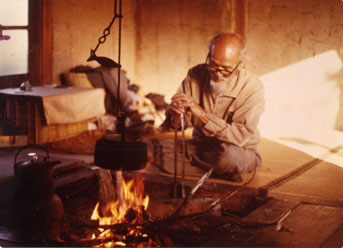
Natural Farming is one subject that I have been interested in for a few years and, more recently, permaculture. My interest in permaculture was sparked when my friend’s wife (who is also, interestingly enough, a friend of mine) took the course about this time last year and told us all about the huge wealths of information involved. This interest has recently blossomed upon finding that the Permaculture Design Course is offered online for free! Through this training I found out about Masanobu Fukuoka, and I am actually attempting to read two of his non-fiction books. Gasp!

Fukuoka reminds me of Wendell Berry, and that is not just because Berry did the foreword 0f his first English-language book. Berry is a farmer, essayist, poet, and novelist from Kentucky (my homeland) who has been championing natural causes, local culture and small farming for half a century. I have been a long-time fan of his breath-taking prose and poetry, and his essays are written so that every sentence expresses a grave wisdom that most others could take paragraphs to attempt without accomplishing. He has been farming his Kentucky hillsides for about half a century now.

I have found that Fukuoka is also a champion of the overlapping between the arts and nature.

There is no time in modern agriculture for a farmer to

write poetry or compose a song.

— Masanobu Fukuoka

I’m going to do my best to finish these Fukuoka books and eventually begin to impliment the techniques of permaculture in our lifestyle.

With the recent tragic death of the great artist Philip Seymour Hoffman, I am left somberly wondering if perhaps his life and full career may have been twice as long and three times as artistically-fulfilling if he were able to find a different way to live, a different atomosphere in which to foster his creative inclinations. A terrible tragedy, linked back to a lifestyle, developed in the same atmosphere that made the artist great.

I am starting to find the answer to my own ask-the-reader question; I am finding that non-fiction and fiction alike can be powerful resources for good change, if we let it change our actions.