The Town Lies Awake Together


I spent most of June through late September taking the air in South America that year. It was the only time in history that I could see news from home in newspapers I could get ahold of in Havana. I always joke that it was a sign I am never meant to escape the gossips of Harkins.

In late August, my friend Chris tells me, the hive was absolutely swarming with activity that, without a context, would have been accountable only as madness. The sweltering heat of the muggy late summer was at complete odds with the bustle and near elation that comes upon a small town anticipating the start of a murder trial.

He said that Arlington Pew looked as disturbingly put together as he ever had, both in demeanor and attire. There has been a long running gag among the local fellas and the better renditions of it involve a fire breaking out in the middle of the night and neighbors rousing Arlington Pew only to find him answering the door fully pressed, dressed, and eager to entertain anyone in distress. I’d bet most every man ’round town has chuckled at that at some point in the past, only on account of it probably being close to the truth. I would also guess that many, like myself, felt a little close at the collar thinking about that joke retrospectively.

It’s true that Pew was not much of a pal to any fella and, for the most part, he seemed more eager for women’s or mixed company. I don’t know that anyone would have believed he had an enemy in the world, though most could only shake there heads to themselves if they considered him long enough.

Well, the way Chris tells it is as good as any I could gather from the reporter’s accounts I read, and the murmur and hum at the outset must have been audible three streets over, if anyone had stayed that far away to hear it.

They say it took Judge Hewlett more than a few wraps of his formidable gavel to get the crowds shuffled into some sort of order, and then there were the additional guards brought in who were still trying to get the doors closed and the halls outside reasonably emptied.

Murders always seem to fascinate men. Sometimes it seems from boredom with living they find excitement in considering those who are no longer doing it and the people who made their decisions for them. Sometimes it seems the grizzly nature of a murder keeps people interested. Other times perhaps the sheer weight of the hate or malice hanging upon the perpetrator is the draw.

In this case, I hold firmly that it was none of these. It was the first murder in Logan County in twelve years, and the first in Harkins in nearly six decades. It was not boredom or grotesqueness or a sheerly violent heart that drew the majority of the local crowds to the house of fair weights to hear the proceedings. It was, I believe, that every local man and woman wanted to ask Arlington Pew a simple question.

“Why? Why, mister Pew, did you decide to kill the boy Harry Clark in the middle of the ladies shoes department in broad daylight? Why did you kill a broke, young optimist when you were always so irritatingly polite and cordial to every difficult customer that regularly took the time to tread all over you?” No one had dared voice it, yet everyone needed to know.

“Order!” or something along those official lines Judge Hewlett called for; his additional guard made sure that he got what he wanted.

“How do you plead?” was the natural progression of these things.

“Not guilty, you’re Honor.” Slowly rising and slowly speaking, the thin man with thin arms had thin fingers splayed out with their ten tips across the oak tabletop.  His confidence bordered on elegance. The people of Harkins were awed.

“We plead not guilty on account of such immense emotional distress as to lead my client Mr. Pew’s into a temporary and recurring insanity. We intended to provide documented evidence of a recurring psychological condition rendering my client without his normal capacity for reason.” Mr. big-name-throughout-the-southern-states, Mr. happy-to-take-the-courtroom-as-his-own-playground, Mr. Timothy Grauers, lanky defendant in the most sensational cases, appeared only too pleased to have the judge cut him off here and remind him that his widely-reputed eloquence aught not take him off into various directions ahead of prescribed schedule.

“Ah-hem!” Mr. Pew, who had fallen completely out of most of the present minds as merely a blurry, peripheral speck at the far end of Mr. Grauers’s table, suddenly came sharply back into focus. The room deadened.

“I think we can wrap this up quite succinctly. I must say my wardrobe and hygiene have suffered greatly in the hands of the jail house facilities these past few days and I feel it my duty therefore to clear this whole business up immediately. The boy was shot, unfortunately, because of the sweat.”

Every ear remained at full attention.

“I beg your pardon, Mr. Pew?” Even Judge Hewlett was unusually cordial in his puzzlement. “The sweat?”

“The sweat, your honor, yes. The sweat. It is common, albeit very unbecoming for some people to perspire in this season of the year. Some of you, due to your line of work or hygiene have greater tendencies than others. While I can accommodate this unfortunate tendency in its necessary place, I believe we can all agree that our illustrious McCavinaugh’s, the crowning jewel of this town’s society, is no place to come in such a state, let alone the ladies department. The disruption for the lady patrons, and Miss Trideux especially, was beyond consolation. The necessary action became apparent. It is a case of self-defense, your Honor. It is a case of defense of the class that is the ‘Lady.'”

Silence continued. The people looked to the judge like children, their eyes pleading for his authority to somehow make sense of this. His brow was furrowed, lip bitten in an almost nervous tell that none ever had or likely ever will see in his courtroom again. He stared deeply into the left rear or the ceiling for some minutes.

“Court is adjourned until tomorrow morning at ten am.” He finally muttered over a weak-wristed gavel knock.

The people filed out silently and orderly, as oppositely composed from their entrance as if they had been choreographed into a funeral procession. Barely a whisper rose. The defense council sat strewn out along the oak table glancing longways and in annoyance at his subject, who sat with folded hands and gazing up high above the judge’s stand. A halo was the only thing missing from the tailored picture of serenity.

Although I always promise him that I believe him wholeheartedly, Chris still swears hard at every retelling that not a soul spoke a word as the crowds dispersed across the lawn and the town square. He says he didn’t really hear many people speaking much in public for almost a week after that day, and when they did start back up he never heard anyone mention the trial again. It continued on in the same courtroom, with the same judge, jury, law men, and guards, but the crowd was gone. Only a handful of non-local gawkers and a myriad of significantly less-cramped newspaper men attended the ensuing battle, which was far shorter and less extravagant than Mr. Grauers intended. Both the local papers stopped covering the story before the case really took off, even though most of the big nationals ran a little front page blurb when the verdict came out. The insanity plea held up too easily for Mr. Grauers’ taste so that he was barely even necessary, and twenty years at Mooreston Sanitarium was the prescribed medication for Arlington Pew. I have heard rumor that his health has greatly deteriorated there and his doctors do not expected much in terms of his mental reform or life expectancy.

I learned quickly upon my return not to make mention of the events that transpired in my absence with just about anyone but Chris. McCavinaugh’s found a far less enthusiastic shoe salesman and apart from that the town tries its hardest to feel no change, to not accept the events of that August.

Occasionally I will have some writer friend from the city stop over in town and, from the comfort and safety of a cloud of pipe smoke in the den, Chris and I will recount for them the incident in the context of its local rejection. It is always hard to decide which is more complicated.

When I lie awake in the night, as I often do, I wonder if the whole town lies awake together, penitent and tormented by the immense secret which the whole world knows. We ride out the darkness to another dawn’s promise, another rest from the question.

– M. Landers, March 2014
J.R.R. Tolkien Tells Off the Nazis


I have read all of this before and would have been eager to do a post myself if someone else hadn’t summed it all up so wonderfully already!

Many thanks to The Bully Pulpit!

Author Quotes – Charles M. Schultz and Creativity Through Anxiety


As a child, I was obsessed with comic strips. I spent years filling spiral bound notebooks with fan fiction and rip-off strips of my own design, sprinkled throughout with drastic, emotional diary entries. I never got into comic books or super heroes, but I loved goofy, highly-stylized caricatures, political cartoons, and any form of a panel-based gag. I even indulged regularly in the eye-rolling puns of Garfield. Calvin and Hobbes was (and still is) more breath-taking and thought provoking with every reading, not to mention a great vocabulary expanding tool. Along side The Far Side, Baby Blues, Zits, Tintin, Family Circus, and many others of my preteen world were Charlie Brown, Snoopy, and Charles M. Schultz.

The death of Charles Schultz was perhaps the first celebrity death I can recall impacting me. Schultz was the first person I ever researched and studied biographically from purely personal interest.

I’m not a die-hard Peanuts fan to be perfectly honest. I prefer a good simple twist in the third panel, and most of Schultz work stuck to self-deprecation or anxious social commentary in a way that most artists in the field had long abandoned. I loved him more for what he was than for attachment to his work. He was the last standing giant from an age of world-renown innovators in the field.

It was interesting then to read the following in Daily Rituals concerning Schultz.

“He would begin by doodling in pencil while he let his mind wander; his usual method was to ‘just sit there and think about the past, kind of dredge up ugly memories and things like that.‘”

And

“The regularity of the work suited his temperament and helped him cope with the chronic anxiety he suffered throughout his life.”

As I mentioned concerning Samuel Beckett, it continues to impress me that great art comes not from overcoming our troubles and idiosyncrasies  or ignoring them, but from exploring what they actually mean about us.

Author Quotes- C. S. Lewis and Fairy Tale Potency


Excerpts from the essay “On Three Ways Of Writing For Children,” by C.S. Lewis. (I highly suggest that you read it in its entirety.) I recently made and Author Quotes post which borrowed heavily from this C. S. Lewis article’s main thrust concerning books for children. Well, he went on so many valuable tangents that I thought I would make a secondary post concerned more with the general defense of fantasy and fairy tales for all ages. Let me know your thoughts

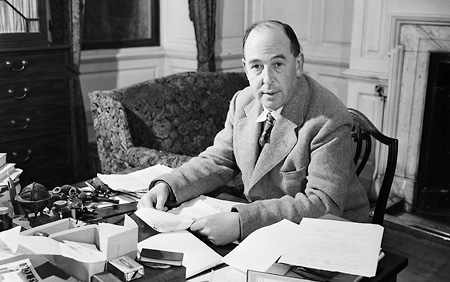
“The whole association of fairy tale and fantasy with childhood is local and accidental. I hope everyone has read Tolkien’s essay on Fairy Tales, which is perhaps the most important contribution to the subject that anyone has yet made. If so, you will know already that, in most places and times, the fairy tale has not been specially made for, nor exclusively enjoyed by, children. It has gravitated to the nursery when it became unfashionable in literary circles, just as unfashionable furniture gravitated to the nursery in Victorian houses. In fact, many children do not like this kind of book, just as many children do not like horsehair sofas: and many adults do like it, just as many adults like rocking chairs. And those who do like it, whether young or old, probably like it for the same reason. And none of us can say with any certainty what that reason is. The two theories which are most often in my mind are those of Tolkien and of Jung.

According to Tolkien the appeal of the fairy story lies in the fact that man there most fully exercises his function as a ‘subcreator’; not, as they love to say now, making a ‘comment upon life’ but making, so far as possible, a subordinate world of his own. Since, in Tolkien’s view, this is one of man’s proper functions, delight naturally arises whenever it is successfully performed. For Jung, fairy tale liberates Archetypes which dwell in the collective unconscious, and when we read a good fairy tale we are obeying the old precept ‘Know thyself’. I would venture to add to this my own theory, not indeed of the Kind as a whole, but of one feature in it: I mean, the presence of beings other than human which yet behave, in varying degrees, humanly: the giants and dwarfs and talking beasts. I believe these to be at least (for they may have many other sources of power and beauty) an admirable hieroglyphic which conveys psychology, types of character, more briefly than novelistic presentation and to readers whom novelistic presentation could not yet reach. Consider Mr Badger in The Wind in the Willows—that extraordinary amalgam of high rank, coarse manners, gruffness, shyness, and goodness. The child who has once met Mr Badger has ever afterwards, in its bones, a knowledge of humanity and of English social history which it could not get in any other way.”

Masanobu Fukuoka and Wendell Berry: Finding Non-Fiction That Changes You For The Better


So I’m beginning to think that I may have lied to you.

About a week ago I made a big point of the fact that I basically hate non-fiction reading. The assertion was that I am bored by non-biographical information in long form. While I’m still not ready claim that I can easily finish a full book of non-fiction, I am realizing that the claim may make it sound like I don’t enjoy learning about reality, when in actuality I love a lot of broader types of information in smaller doses.

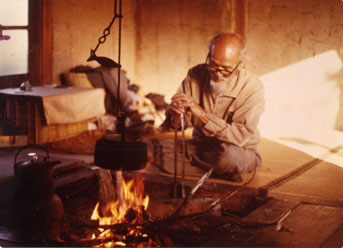
Natural Farming is one subject that I have been interested in for a few years and, more recently, permaculture. My interest in permaculture was sparked when my friend’s wife (who is also, interestingly enough, a friend of mine) took the course about this time last year and told us all about the huge wealths of information involved. This interest has recently blossomed upon finding that the Permaculture Design Course is offered online for free! Through this training I found out about Masanobu Fukuoka, and I am actually attempting to read two of his non-fiction books. Gasp!

Fukuoka reminds me of Wendell Berry, and that is not just because Berry did the foreword 0f his first English-language book. Berry is a farmer, essayist, poet, and novelist from Kentucky (my homeland) who has been championing natural causes, local culture and small farming for half a century. I have been a long-time fan of his breath-taking prose and poetry, and his essays are written so that every sentence expresses a grave wisdom that most others could take paragraphs to attempt without accomplishing. He has been farming his Kentucky hillsides for about half a century now.

I have found that Fukuoka is also a champion of the overlapping between the arts and nature.

There is no time in modern agriculture for a farmer to

write poetry or compose a song.

— Masanobu Fukuoka

I’m going to do my best to finish these Fukuoka books and eventually begin to impliment the techniques of permaculture in our lifestyle.

With the recent tragic death of the great artist Philip Seymour Hoffman, I am left somberly wondering if perhaps his life and full career may have been twice as long and three times as artistically-fulfilling if he were able to find a different way to live, a different atomosphere in which to foster his creative inclinations. A terrible tragedy, linked back to a lifestyle, developed in the same atmosphere that made the artist great.

I am starting to find the answer to my own ask-the-reader question; I am finding that non-fiction and fiction alike can be powerful resources for good change, if we let it change our actions.

Have You Been Publishing Online?


For a long time now I have stood on the outside wondering where people go to read and write fan-fiction and other online fiction resources. I know that there are large numbers of people writing and reading online and that a number of recent best-sellers originated from serial-writing that gained mass audiences online before finding publishing.

A couple of days ago I stumbled upon Wattpad. I don’t read very much current fiction unless someone like Neil Gaiman is writing it, so for me this is completely uncharted territory. My question for those of you who keep up with current fiction trends is this.

Have you used Wattpad or any similar services, either as a reader or author?

What’s have you found is the best format to publish novels or other works in a serial, read-as-completed kind of format?

Author Quotes – C. S. Lewis, Reality, & Children’s Literature


Excerpts from the essay “On Three Ways Of Writing For Children,” by C.S. Lewis. (I highly suggest that you read it in its entirety.)

My first picture book, Wandlung, should be coming out within the next month. If you’re interested in understanding my philosophy on children’s literature (and children in general), these excerpts come as near to defining them as I could myself. I tore apart this essay to find the most impactful statements.

“Sentimentality is so apt to creep in if we write at length about children as seen by their elders. And the reality of childhood, as we all experienced it, creeps out. For we all remember that our childhood, as lived, was immeasurably different from what our elders saw. Hence Sir Michael Sadler, when I asked his opinion about a certain new experimental school, replied, ‘I never give an opinion on any of those experiments till the children have grown up and  can tell us what really happened.’

. . . I think we have stumbled on a principle. Where the children’s story is simply the right form for what the author has to say, then of course readers who want to hear that, will read the story or re-read it, at any age. I never met The Wind in the Willows or the Bastable books till I was in my late twenties, and I do not think I have enjoyed them any the less on that account. I am almost inclined to set it up as a canon that a children’s story which is enjoyed only by children is a bad children’s story.

. . . I am not quite sure what made me, in a particular year of my life, feel that not only a fairy tale, but a fairy tale addressed to children, was exactly what I must write—or burst. Partly, I think, that this form permits, or compels you to leave out things I wanted to leave out. It compels you to throw all the force of the book into what was done and said. It checks what a kind, but discerning critic called ‘the expository demon’ in me. It also imposes certain very fruitful necessities about length.

. . . About once every hundred years some wiseacre gets up and tries to banish the fairy tale. Perhaps I had better say a few words in its defence, as reading for children.

It is accused of giving children a false impression of the world they live in But I think no literature that children could read gives them less of a false impression. I think what profess to be realistic stories for children are far more likely to deceive them. I never expected the real world to be like the fairy tales. I think that I did expect school to be like the school stories. The fantasies did not deceive me: the school stories did.

. . . The real victim of wishful reverie does not batten on the Odyssey, The Tempest, or The Worm Ouroboros: he (or she) prefers stories about millionaires, irresistible beauties, posh hotels, palm beaches and bedroom scenes—things that really might happen, that ought to happen, that would have happened if the reader had had a fair chance. For, as I say, there are two kinds of I longing. The one is an askesis, a spiritual exercise, and the other is a disease.

A far more serious attack on the fairy tale as children’s literature comes from those who do not wish children to be frightened. I suffered too much from night-fears myself in childhood to undervalue this objection. . . They may mean (1) that we must not do anything likely to give the child those haunting, disabling, pathological fears against which ordinary courage is helpless: in fact, phobias. His mind must, if possible, be kept clear of things he can’t bear to think of. Or they may mean (2) that we must try to keep out of his mind the knowledge that he is born into a world of death, violence, wounds, adventure, heroism and cowardice, good and evil. If they mean the first I agree with them: but not if they mean the second. The second would indeed be to give children a false impression and feed them on escapism in the bad sense. There is something ludicrous in the idea of so educating a generation which is born to the Ogpu and the atomic bomb. Since it is so likely that they will meet cruel enemies, let them at least have heard of brave knights and heroic courage. Otherwise you are making their destiny not brighter but darker. Nor do most of us find that violence and bloodshed, in a story, produce any haunting dread in the minds of children. As far as that goes, I side impenitently with the human race against the modern reformer. Let there be wicked kings and beheadings, battles and dungeons, giants and dragons, and let villains be soundly killed at the end the book. Nothing will persuade me that this causes an ordinary child any kind or degree of fear beyond what it wants, and needs, to feel. For, of course, it wants to be a little frightened.

. . . I think it possible that by confining your child to blameless stories of child life in which nothing at all alarming ever happens, you would fail to banish the terrors, and would succeed in banishing all that can ennoble them or make them endurable. For in the fairy tales, side by side with the terrible figures, we find the immemorial comforters and protectors, the radiant ones; and the terrible figures are not merely terrible, but sublime. It would be nice if no little boy in bed, hearing, or thinking he hears, a sound, were ever at all frightened. But if he is going to be frightened, I think it better that he should think of giants and dragons than merely of burglars. And I think St George, or any bright champion in armour, is a better comfort than the idea of the police.

I feel sure that the question ‘What do modern children need?’ will not lead you to a good moral. If we ask that question we are assuming too superior an attitude. It would be better to ask ‘What moral do I need?’ for I think we can be sure that what does not concern us deeply will not deeply interest our readers, whatever their age. But it is better not to ask the question at all. Let the pictures tell you their own moral. For the moral inherent in them will rise from whatever spiritual roots you have succeeded in striking during the whole course of your life. But if they don’t show you any moral, don’t put one in. For the moral you put in is likely to be a platitude, or even a falsehood, skimmed from the surface of your consciousness. It is impertinent to offer the children that. For we have been told on high authority that in the moral sphere they are probably at least as wise as we. Anyone who can write a children’s story without a moral, had better do so: that is, if he is going to write children’s stories at all. The only moral that is of any value is that which arises inevitably from the whole cast of the author’s mind.”

The Empty Plinth


There are three women with whom I share my deepest secrets.

The first is my wife. She is my lover and my co-laborer. She helped to make my babies and she nurtures them so that I have no worries when I am not near them, for the warmth between them warms me from afar. We march through life gently, arm-in-arm, and are not swayed; head-long, we step into the unknown and terrible future. She is the tree which Silverstein asked to give, for “though she be but little, she is fierce.”

The second woman lives above the water with her daughter, in the midst of the rose garden. She is Galatea at play, full of mirth and triviality. She is a vision in the sun, distracted most by the summer joy which distracts all together and without offence; we smile upon the Blinding Light as one. She and her child, Metharme, belong among the bees and the roses and the splashings of fish in the pond. Her company is sweet upon a summer lawn, and the days seem an eternity stood still in her hazy presence.

The third woman is downcast, standing among holly and thorns. She stands uncovered, naked and abandoned in the recesses. She weeps gently, though I know not why, hands cast about, her very frame ever on the verge of despair. She speaks not her sorrow, but on her bench I find my place when all the world faces downward; when the winter’s wind rips me I find solace in my sorrow at her side. She is the beacon for the hopeless, and when I lose my own I find refuge at her side, tucked away within the dark depth.

I visited the downcast woman and I noticed in the darkness something I had never seen before. Far back in the depths of her holly home there stood, decayed, a plinth with no owner. Fighting against the needle leaves and unwealding branches I made my way closer, though little closer was I able to come. No sign of the owner, no rubble or dust remained. And suddenly I knew for what, for whom, she despaired.

Be he marble or be he stone, he was gone and it did not matter. Their is no form a man can take which assures he will remain.

Do You Feel Changed By Non-Fiction?


I rarely commit myself to entire books of non-fiction. That sort of discipline requires a certain skill I have yet to gain, and I usually find my mind wandering to thoughts of how much better my time would be spent on fiction. Or with my kids. Or outdoors. Or doing anything else.

I am, however, 100% converted to be pro-non-fiction when it concerns the lives and philosophies of artists and creatives. As an adult, I never really cared to read any of J.R.R. Tolkien’s works. As all good children do, I once thrived on The Hobbit as a child and I watched the old Rankin-Bass animated adaptation nearly daily. I stopped caring much after middle school. Then one day, I was handed a thrift store copy of a book of essays on the man himself. Reading about Tolkien fascinated me. I became suddenly motivated to read all his books (starting with Children Of Hurin, oddly enough), and it was key to my eventual wider interest in all sorts of other fiction. It is often the artist that I am interested in as deeply as the work itself.

Lately I have been making my way through the recently published tome Salinger, by David Shields and Shane Salerno. It’s written in oral biography form, meaning simply that the entire book is a well organized collection of quoted statements from a variety of J.D. Salinger’s friends, family members, and business associates, along with some other scholars. This is my first oral biography, and I find it wonderful and fascinating to read a story as you would watch documentary interview footage.

Anyway, the main point I’m trying to come to is actually a question for you, the reader. It is simply this.

Do you feel that reading non-fiction changes you?

I think it is obvious to me that much of the time we read fiction to be changed. We read genre fiction to be swept up in a certain formula of a world, to get away or put on a certain mindset. We read high literature to test and expand our world-views, to endeavor to understand a wider range of real-world experiences and emotions.

But what about non-fiction? I consider myself a novice, but I assume that non-fiction reading is generally more of an attempt to gain information. Is this true for those who read lots of non-fiction?

As I have been reading Salinger, I’ve witnessed in detail the life of a very odd but relatable man, a highly intelligent and sensitive fellow who holds materialism, war, and first-world society at large in contempt while struggling also with the desire to be accepted and validated by the only world he sees around him. He gets weirder and weirder as his life goes on, troubled by WWII memories and a publicity that grows more as he tries to hide from it. As I pour over the details and see some aspect here or a statement there which I can relate to, I feel something familiar to me which I’ve never really heard discussed.

I walk away from the book in the spirit of the subject.

I am overwhelmed by thoughts that I might have had myself, independently, but never so consistently or overwhelmingly as after reading about a similarly-plagued mind. I tend to feel like I’m understanding him a little too well, like I am perhaps agreeing too much with his understanding of the world.

Does this happen to everyone? Without getting too mystical (that would be a great conversation for another time) or sounding too much like a creeper stalker or obsessive fan, I wonder honestly how our attempts to understand something through non-fiction affect us regardless of whether we intend to agree with the subject or not. We humans have a knack for studying things which are ugly, and I don’t stand opposed to this at all. I very firmly believe that we should be learning to cope with the reality of both the unspeakable beauties and horrors of this world. I do wonder, though, if perhaps we don’t recognize when a healthy understanding of the world fades into an attempt to reconcile or justify something in ourselves. Or something worse.

So what do you think?

What’s up with people who read so much non-fiction?

Why are the serial killer/murderer bio sections so full in our book stores?

When does gaining a healthy perspective bleed into an enjoyment of despair in the onlooker?

Author Quotes – Samuel Beckett & The Value of Depression


Excerpt from “Daily Rituals” by Mason Curry.

The siege began with an epiphany. On a late-night walk near Dublin harbor, Beckett found himself standing on the end of a pier in the midst of a winter storm.

Amidst the howling wind and the churning water, he suddenly realized that the ‘dark he had struggled to keep under’ in his life–and in his writing, which had until then failed to find an audience or meet his own aspirations–should, in fact, be the source of his creative inspirations. ‘I shall always be depressed,’ Beckett concluded, ‘but what comforts me is the realization that I can now accept this dark side as the commanding side of my personality. In accepting it, I will make it work for me.'”

In an age of anti-depressants we’re taught that to feel a certain emotion is to feel wrongly and need reparation, regardless of its legitimacy. I’m reminded of so many stories of WWII veterans who returned from war only to find that they had no way to voice the immensity of the horrors they experienced first hand. What is even worse is that no one back home actually wanted to know anything about it after it was over. Throughout my life, I’ve heard a constant stream of people reinforce the idea that a bleak outlook in this world is something to be overcome and left behind. Many of my own friends have voiced opinions that art that reflects anything overtly evil thereby implies that the artist is himself damaged or not to be trusted.

As you will probably find very quickly, I happen to believe that we should face the demons of this world honestly and boldly. I think appreciating the gravity and inevitability of death and the tragedies of humanity actually give us sobriety to step into life and chose to live.

If we cannot look boldly into the face of the oppressor, how can we claim to understand the gravity of our hope?