Author Quotes

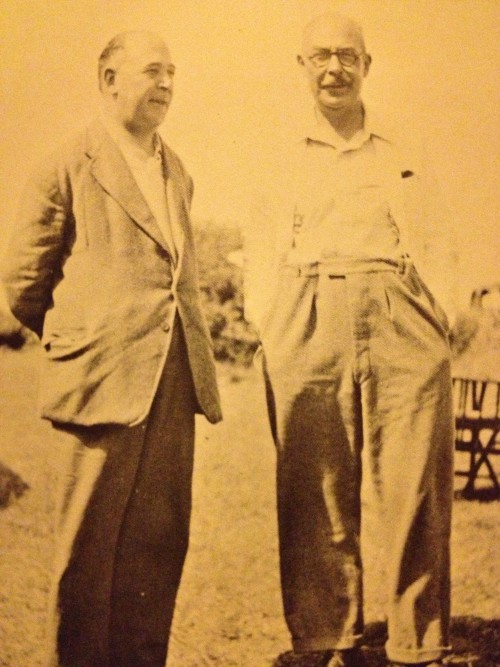
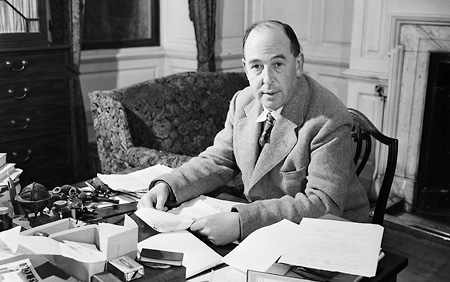
Author Quotes: W. H. Lewis’ First Impressions of Lord Of The Rings


Long before The Lord Of The Rings reached publication it was read aloud, chapter by chapter as completed, to Tolkien and Lewis’ little band of creatives, the Inklings. A group of mainly scholars and professors from the Oxford area, the Inklings met on Tuesday mornings and Thursday nights for a pint of beer or cider, a good debate over whatever subjects came to minds, and often a reading of someone’s poem, essay, or story. It was to this group that Tolkien, or more often his son and fellow Inkling Christopher, first read what was then referred to simply as “The new Hobbit”.

Here is the diary entry of Major Warren H. Lewis following his reading of the completed manuscript.

Saturday November 12th, 1949

“I have just finished the MS. [of Tolkien’s] sequel to The Hobbit, Lord Of The Rings. Golly, what a book! The inexhaustible fertility of the man’s imagination amazes me. It is a long book, consisting very largely in journeys: yet these never flag for an instant, each is as fresh as the one before, new colors available in profusion, whether the journey be beautiful or terrible. Some of the scenes of horror are unsurpassed, and there is wonderful skill in the way which the ultimate horror–the Dark Lord of Mordor–is ever present in one’s mind, though we never meet him, and know next to nothing about him. The beauty of Lothlorien, and the slightly sinister charm of Fangorn are unforgettable. Frodo’s squire, Sam Gamgee and the dwarf Gimli are I think the two best characters. What is rare in a story of this type, is that there is real pathos in it; the relationship between Sam and Frodo in the final stages of their journey moved me greatly. How the public will take the book I can’t imagine; I should think T will be wise to prepare himself for a good deal of misunderstanding, and many crits. on the line that ‘this political satire would gain greatly by compression and the excision of such irrelevant episodes as the journey to Lothlorien’. Indeed, by accident, a great deal of it can be read topically–the Shire standing for England, Rohan for France, Gondor the Germany of the future, Sauron for Stalin: and Saruman in the ‘Scouring of the Shire’ for our egregious Mr. Silkin, the town planner (and destroyer)! But a great book of its kind, and in my opinion ahead of anything Eddison* did.”

*Referring to E.R. Eddison, author of The Worm Of Ouroboros(1922), a similar mythological work. Eddison met Tolkien and Lewis before his death in 1945.

Author Quotes: W.H. Lewis and What The Germans Knew


One of the biggest gut-wrenching questions asked by the world in the aftermath of World War II was simply,

“How much did the German people know?”

Perhaps the most natural question one asks when confronted with human atrocity on such a scale is simply “How?” How can the people of German claim to have no knowledge of genocide in their backyards, committed by their relatives and neighbors?

It’s telling then, to say the least, to read this entry from the diary of Major Warren H. Lewis, brother of C.S. Lewis, and to recognize the date of the entry and the thoroughly eery foreboding it carries in hindsight. It also begs the heavy question, if an English visitor was able to get this clear a picture this early in history, how could the residents claim to not know anything after things got so much worse?

Saturday 17th November, 1934

“J’s friend and former pupil Pirie Gordon came to tea this afternoon: he is just back from Germany, and talked interestingly about his experiences there. He told us–on authority of the Times correspondent–that in a concentration camp near Munich (?) 40 persons have dies by torture since the camp opened, and 150 of ‘natural’ causes. He notices a distinct falling off in the Nazi enthusiasm, as contrasted with his previous visit in the summer, but admits that in the summer he mixed chiefly with students, and this time with the middle aged. The Term still continues, and people are constantly being arrested and vanishing. He doubts if Hitler is fully aware of the cruelties which are being practiced in his name. A Herr Himmler is head of the Ogpu or whatever it is called, and is the most sinister figure in Germany. There appear to be rumors that Hitler is mentally deranged: it is common knowledge that Goering was in a private lunatic asylum at the time of the Nazi coup–his insanity being caused by excessive drug taking.”

Author Quotes: J.R.R. Tolkien On Creativity and Death


There are many obvious reasons to love J.R.R. Tolkien. As the years go on his son Christopher Tolkien, who is now quite an old man himself, continues to publish the nearly completed works to which his father was devoted. Just when we assume that everything great has been revealed, the author who has been dead for half a century is revealed to have written another riveting tale to add to his impressive cannon.

Aside from his fiction work, however, I am brought back time and again to the philosophical moorings upon which the author founded all of his creative thinking. His essay “On Fairy Stories” is, in my opinion, a breakthrough and little-rivaled treatment of the nature of inspiration and the mystical and supremely natural traits inherent in human creativity.

Apart from this (or perhaps as a part of this), there is one other area of thought that constantly brings me back to considering Tolkien’s creative works, thoughts on creativity, and thoughts on life in general. He was obsessed with everything being layered upon a recognition of death. Death surrounds us. Death defines our lives. Around 1951, Tolkien wrote a 10,000 letter to Milton Waldman of Collins Pub. in hopes of convincing them to include The Silmarillion in their decision to print The Lord Of The Rings. In the midst of explaining the value he sees in what really was his entire life’s work, he makes this clarifying statement

“In the cosmogony there is a fall: a fall of Angels we should say. Though quite different in form, of course, to that of Christian myth. These tales are ‘new’, they are not directly derived from other myths and legends, but they must inevitably contain a large measure of ancient wide-spread motives or elements. After all, I believe that legends and myths are largely made of ‘truth’, and indeed present aspects of it that can only be received in this mode; and long ago certain truths and modes of this kind were discovered and must always reappear. There cannot be any ‘story’ without a fall – all stories are ultimately about the fall – at least not for human minds as we know them and have them.”

Tolkien always returns to contemplate the extremes of falleness against sheer natural beauty, death against the irripressable joy of living. In Tolkien’s work many find that the escape of the good story actually leaves them ready to enjoy their own life more fully rather than longing for a different world. I think Tolkien’s tragic personal history and the closeness of death throughout his formative years built a resilience and awareness in him that ultimately directed his creations and provided that almost indescibable beauty and familiarity which captures his readers.

Tolkien does himself and his work justice when he summarizes his work with a Simone de Beauvoire quote on the mysteries of dying and living.


*Althought I find the writing and editing quite odd, I highly suggest watching the entire Tolkien episode of the BBC’s In Their Own Words, available here in part 1 and part 2.

Wendell Berry’s Greatest Poem


While I have mentioned him here in passing, I must now go on record stating that Wendell Berry is my favorite living sage thinker. He takes the practical steps to live exactly what he believes. His life is an inspiration in its thought-out-and-acted-upon simplicity. He is a Kentucky farm boy, turned scholar and poet, turned university professor, turned cultural and political activist, turned farmer. While I would highly encourage you to dive into his essays, poetry, open letters, and novels, I am more eager that you delve deeper into his personal story.

While I would still consider myself a novice in his work, I always come back to one poem in particular. I have read and loved some of his short stories and his novel Hannah Coulter, and Jayber Crow is on my 55 Classic’s List. I have read many of his open letters and essays, and Bring It To The Table has also made its way into the 55.

Even with all this great material, I am most impressed by his poem “How To Be a Poet”.

How To Be a Poet
BY WENDELL BERRY
(to remind myself)

i

Make a place to sit down.
Sit down. Be quiet.
You must depend upon
affection, reading, knowledge,
skill—more of each
than you have—inspiration,
work, growing older, patience,
for patience joins time
to eternity. Any readers
who like your poems,
doubt their judgment.

ii

Breathe with unconditional breath
the unconditioned air.
Shun electric wire.
Communicate slowly. Live
a three-dimensioned life;
stay away from screens.
Stay away from anything
that obscures the place it is in.
There are no unsacred places;
there are only sacred places
and desecrated places.

iii

Accept what comes from silence.
Make the best you can of it.
Of the little words that come
out of the silence, like prayers
prayed back to the one who prays,
make a poem that does not disturb
the silence from which it came.

C.S. Lewis And J.R.R. Tolkien: “The Strength Of The Hills Is Not Ours”


While permaculture is still a newish (30-40 years) subject of suddenly increased interest (myself falling in among the band-waggon stagers), I’m learning not to be surprised when I stumble upon a highly relevant, pre-dating thought from someone who would not be considered a natural farming resource. In a letter to his life-long pen pal Arthur Greeves dated the 22nd of June, 1930, C.S. Lewis mentions Tolkien’s thoughts on the spiritual and generational effects of living directly off of the physically surrounding country.

“Tolkien once remarked to me that the feeling about home must have been quite different in the days when the family had fed on the produce of the same few miles of country for six generations, and that perhaps this was why they saw nymphs in the fountains and dryads in the wood – they were not mistaken for there was in a sense a real (not metaphorical) connection between them and the countryside. What had been earth and air & later corn, and later still bread, really was in them. We of course who live on a standardised international diet (you may have had Canadian flour, English meat, Scotch oatmeal, African oranges, & Australian wine to day) are really artificial beings and have no connection (save in sentiment) with any place on earth. We are synthetic men, uprooted. The strength of the hills is not ours.”

People like Fukuoka, Lewis, Berry and Tolkien seem to have this in common: they interest was not in resonse to a couple of generations of problems and discontent, or because of some impending global disaster. They began by asking themselves much larger questions about what it means to be human and, when alighting upon confident conclusions, the implications of what they understood led them to value the concepts that permaculture and natural farming ideals now come to out of desparation or fear. They were asking these questions in the 1920’s, 30’s, and 50’s. When everyone else was head over heels in love with new technologies, they were wondering at what had been lost. I am in no way implying that those who desire to live naturally do not see the immense beauty before them, I only mean to point out the difference between coming from a concept to its implication versus finding that the natural is the necessary solution to so much unnatural action. I think I’ll go medetate on these philosophies a bit more before heading back into the practical how-to’s.

Author Quotes – Ingmar Bergman, Worship, and Artistic Motovation


I love Hitchcock, Wes Anderson, Truffaut and Rod Serling. I have a handful of shining favorite film makers who stand far above the rest, and they are all very different from one another. One of the newer (to me) yet most deeply moving of the whole bunch is Ingmar Bergman. His film Wild Strawberries is the most deeply personally-revelatory film I have ever seen. It means a little more to me each time I consider it.

Bergman’s films have a common theme of fear facing the inevitability of death which stands at nervous odds with a perception that God is there but faith is not sufficient to bolster the soul’s confidence. His characters find death so overwhelming that they can find no solace in what they see as a less overwhelming faith. I read this quote from Four Screenplays Of Ingmar Bergman and found his perspective even more complex than his films make it appear.

“Regardless of my own beliefs and my own doubts, which are unimportant in this connection, it is my opinion that art lost its basic creative drive the moment it was separated from worship. It severed an umbilical cord and now lives its own sterile life, generating and degenerating itself. In former days the artist remained unknown and his work was to the glory of God. He lived and died without being more or less important than other artisans; ‘eternal values,’ ‘immortality’ and ‘masterpiece’ were terms not applicable in his case. The ability to create was a gift. In such a world flourished invulnerable assurance and natural humility. Today the individual has become the highest form and the greatest bane of artistic creation.
The smallest wound or pain of the ego is examined under a microscope as if it were of eternal importance. The artist considers his isolation, his subjectivity, his individualism almost holy. Thus we finally gather in one large pen, where we stand and bleat about our loneliness without listening to each other and without realizing that we are smothering each other to death. The individualists stare into each other’s eyes and yet deny the existence of each other.”

Even for a man so troubled by the idea of so much blind faith, art for no sake but the individual doesn’t click. It does seem quite a fair assessment to me.

Author Quotes – Charles M. Schultz and Creativity Through Anxiety


As a child, I was obsessed with comic strips. I spent years filling spiral bound notebooks with fan fiction and rip-off strips of my own design, sprinkled throughout with drastic, emotional diary entries. I never got into comic books or super heroes, but I loved goofy, highly-stylized caricatures, political cartoons, and any form of a panel-based gag. I even indulged regularly in the eye-rolling puns of Garfield. Calvin and Hobbes was (and still is) more breath-taking and thought provoking with every reading, not to mention a great vocabulary expanding tool. Along side The Far Side, Baby Blues, Zits, Tintin, Family Circus, and many others of my preteen world were Charlie Brown, Snoopy, and Charles M. Schultz.

The death of Charles Schultz was perhaps the first celebrity death I can recall impacting me. Schultz was the first person I ever researched and studied biographically from purely personal interest.

I’m not a die-hard Peanuts fan to be perfectly honest. I prefer a good simple twist in the third panel, and most of Schultz work stuck to self-deprecation or anxious social commentary in a way that most artists in the field had long abandoned. I loved him more for what he was than for attachment to his work. He was the last standing giant from an age of world-renown innovators in the field.

It was interesting then to read the following in Daily Rituals concerning Schultz.

“He would begin by doodling in pencil while he let his mind wander; his usual method was to ‘just sit there and think about the past, kind of dredge up ugly memories and things like that.‘”

And

“The regularity of the work suited his temperament and helped him cope with the chronic anxiety he suffered throughout his life.”

As I mentioned concerning Samuel Beckett, it continues to impress me that great art comes not from overcoming our troubles and idiosyncrasies  or ignoring them, but from exploring what they actually mean about us.

Author Quotes- C. S. Lewis and Fairy Tale Potency


Excerpts from the essay “On Three Ways Of Writing For Children,” by C.S. Lewis. (I highly suggest that you read it in its entirety.) I recently made and Author Quotes post which borrowed heavily from this C. S. Lewis article’s main thrust concerning books for children. Well, he went on so many valuable tangents that I thought I would make a secondary post concerned more with the general defense of fantasy and fairy tales for all ages. Let me know your thoughts

“The whole association of fairy tale and fantasy with childhood is local and accidental. I hope everyone has read Tolkien’s essay on Fairy Tales, which is perhaps the most important contribution to the subject that anyone has yet made. If so, you will know already that, in most places and times, the fairy tale has not been specially made for, nor exclusively enjoyed by, children. It has gravitated to the nursery when it became unfashionable in literary circles, just as unfashionable furniture gravitated to the nursery in Victorian houses. In fact, many children do not like this kind of book, just as many children do not like horsehair sofas: and many adults do like it, just as many adults like rocking chairs. And those who do like it, whether young or old, probably like it for the same reason. And none of us can say with any certainty what that reason is. The two theories which are most often in my mind are those of Tolkien and of Jung.

According to Tolkien the appeal of the fairy story lies in the fact that man there most fully exercises his function as a ‘subcreator’; not, as they love to say now, making a ‘comment upon life’ but making, so far as possible, a subordinate world of his own. Since, in Tolkien’s view, this is one of man’s proper functions, delight naturally arises whenever it is successfully performed. For Jung, fairy tale liberates Archetypes which dwell in the collective unconscious, and when we read a good fairy tale we are obeying the old precept ‘Know thyself’. I would venture to add to this my own theory, not indeed of the Kind as a whole, but of one feature in it: I mean, the presence of beings other than human which yet behave, in varying degrees, humanly: the giants and dwarfs and talking beasts. I believe these to be at least (for they may have many other sources of power and beauty) an admirable hieroglyphic which conveys psychology, types of character, more briefly than novelistic presentation and to readers whom novelistic presentation could not yet reach. Consider Mr Badger in The Wind in the Willows—that extraordinary amalgam of high rank, coarse manners, gruffness, shyness, and goodness. The child who has once met Mr Badger has ever afterwards, in its bones, a knowledge of humanity and of English social history which it could not get in any other way.”

Masanobu Fukuoka and Wendell Berry: Finding Non-Fiction That Changes You For The Better


So I’m beginning to think that I may have lied to you.

About a week ago I made a big point of the fact that I basically hate non-fiction reading. The assertion was that I am bored by non-biographical information in long form. While I’m still not ready claim that I can easily finish a full book of non-fiction, I am realizing that the claim may make it sound like I don’t enjoy learning about reality, when in actuality I love a lot of broader types of information in smaller doses.

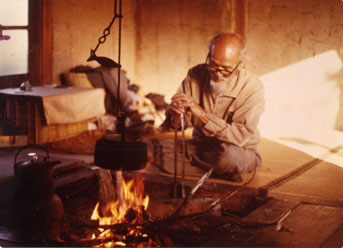
Natural Farming is one subject that I have been interested in for a few years and, more recently, permaculture. My interest in permaculture was sparked when my friend’s wife (who is also, interestingly enough, a friend of mine) took the course about this time last year and told us all about the huge wealths of information involved. This interest has recently blossomed upon finding that the Permaculture Design Course is offered online for free! Through this training I found out about Masanobu Fukuoka, and I am actually attempting to read two of his non-fiction books. Gasp!

Fukuoka reminds me of Wendell Berry, and that is not just because Berry did the foreword 0f his first English-language book. Berry is a farmer, essayist, poet, and novelist from Kentucky (my homeland) who has been championing natural causes, local culture and small farming for half a century. I have been a long-time fan of his breath-taking prose and poetry, and his essays are written so that every sentence expresses a grave wisdom that most others could take paragraphs to attempt without accomplishing. He has been farming his Kentucky hillsides for about half a century now.

I have found that Fukuoka is also a champion of the overlapping between the arts and nature.

There is no time in modern agriculture for a farmer to

write poetry or compose a song.

— Masanobu Fukuoka

I’m going to do my best to finish these Fukuoka books and eventually begin to impliment the techniques of permaculture in our lifestyle.

With the recent tragic death of the great artist Philip Seymour Hoffman, I am left somberly wondering if perhaps his life and full career may have been twice as long and three times as artistically-fulfilling if he were able to find a different way to live, a different atomosphere in which to foster his creative inclinations. A terrible tragedy, linked back to a lifestyle, developed in the same atmosphere that made the artist great.

I am starting to find the answer to my own ask-the-reader question; I am finding that non-fiction and fiction alike can be powerful resources for good change, if we let it change our actions.

Author Quotes – C. S. Lewis, Reality, & Children’s Literature


Excerpts from the essay “On Three Ways Of Writing For Children,” by C.S. Lewis. (I highly suggest that you read it in its entirety.)

My first picture book, Wandlung, should be coming out within the next month. If you’re interested in understanding my philosophy on children’s literature (and children in general), these excerpts come as near to defining them as I could myself. I tore apart this essay to find the most impactful statements.

“Sentimentality is so apt to creep in if we write at length about children as seen by their elders. And the reality of childhood, as we all experienced it, creeps out. For we all remember that our childhood, as lived, was immeasurably different from what our elders saw. Hence Sir Michael Sadler, when I asked his opinion about a certain new experimental school, replied, ‘I never give an opinion on any of those experiments till the children have grown up and  can tell us what really happened.’

. . . I think we have stumbled on a principle. Where the children’s story is simply the right form for what the author has to say, then of course readers who want to hear that, will read the story or re-read it, at any age. I never met The Wind in the Willows or the Bastable books till I was in my late twenties, and I do not think I have enjoyed them any the less on that account. I am almost inclined to set it up as a canon that a children’s story which is enjoyed only by children is a bad children’s story.

. . . I am not quite sure what made me, in a particular year of my life, feel that not only a fairy tale, but a fairy tale addressed to children, was exactly what I must write—or burst. Partly, I think, that this form permits, or compels you to leave out things I wanted to leave out. It compels you to throw all the force of the book into what was done and said. It checks what a kind, but discerning critic called ‘the expository demon’ in me. It also imposes certain very fruitful necessities about length.

. . . About once every hundred years some wiseacre gets up and tries to banish the fairy tale. Perhaps I had better say a few words in its defence, as reading for children.

It is accused of giving children a false impression of the world they live in But I think no literature that children could read gives them less of a false impression. I think what profess to be realistic stories for children are far more likely to deceive them. I never expected the real world to be like the fairy tales. I think that I did expect school to be like the school stories. The fantasies did not deceive me: the school stories did.

. . . The real victim of wishful reverie does not batten on the Odyssey, The Tempest, or The Worm Ouroboros: he (or she) prefers stories about millionaires, irresistible beauties, posh hotels, palm beaches and bedroom scenes—things that really might happen, that ought to happen, that would have happened if the reader had had a fair chance. For, as I say, there are two kinds of I longing. The one is an askesis, a spiritual exercise, and the other is a disease.

A far more serious attack on the fairy tale as children’s literature comes from those who do not wish children to be frightened. I suffered too much from night-fears myself in childhood to undervalue this objection. . . They may mean (1) that we must not do anything likely to give the child those haunting, disabling, pathological fears against which ordinary courage is helpless: in fact, phobias. His mind must, if possible, be kept clear of things he can’t bear to think of. Or they may mean (2) that we must try to keep out of his mind the knowledge that he is born into a world of death, violence, wounds, adventure, heroism and cowardice, good and evil. If they mean the first I agree with them: but not if they mean the second. The second would indeed be to give children a false impression and feed them on escapism in the bad sense. There is something ludicrous in the idea of so educating a generation which is born to the Ogpu and the atomic bomb. Since it is so likely that they will meet cruel enemies, let them at least have heard of brave knights and heroic courage. Otherwise you are making their destiny not brighter but darker. Nor do most of us find that violence and bloodshed, in a story, produce any haunting dread in the minds of children. As far as that goes, I side impenitently with the human race against the modern reformer. Let there be wicked kings and beheadings, battles and dungeons, giants and dragons, and let villains be soundly killed at the end the book. Nothing will persuade me that this causes an ordinary child any kind or degree of fear beyond what it wants, and needs, to feel. For, of course, it wants to be a little frightened.

. . . I think it possible that by confining your child to blameless stories of child life in which nothing at all alarming ever happens, you would fail to banish the terrors, and would succeed in banishing all that can ennoble them or make them endurable. For in the fairy tales, side by side with the terrible figures, we find the immemorial comforters and protectors, the radiant ones; and the terrible figures are not merely terrible, but sublime. It would be nice if no little boy in bed, hearing, or thinking he hears, a sound, were ever at all frightened. But if he is going to be frightened, I think it better that he should think of giants and dragons than merely of burglars. And I think St George, or any bright champion in armour, is a better comfort than the idea of the police.

I feel sure that the question ‘What do modern children need?’ will not lead you to a good moral. If we ask that question we are assuming too superior an attitude. It would be better to ask ‘What moral do I need?’ for I think we can be sure that what does not concern us deeply will not deeply interest our readers, whatever their age. But it is better not to ask the question at all. Let the pictures tell you their own moral. For the moral inherent in them will rise from whatever spiritual roots you have succeeded in striking during the whole course of your life. But if they don’t show you any moral, don’t put one in. For the moral you put in is likely to be a platitude, or even a falsehood, skimmed from the surface of your consciousness. It is impertinent to offer the children that. For we have been told on high authority that in the moral sphere they are probably at least as wise as we. Anyone who can write a children’s story without a moral, had better do so: that is, if he is going to write children’s stories at all. The only moral that is of any value is that which arises inevitably from the whole cast of the author’s mind.”